The Two Feet Forward Blog

Dog Walking For a Living

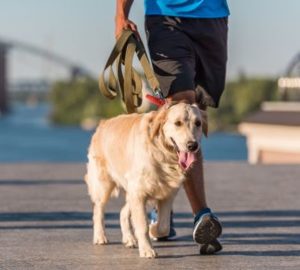
Man walking a golden retriever dog on leash. Gazing outside from behind the dreary landscape of our desks, few are the people who can say they’ve never given a thought to a career change that involved working outside–river guide, perhaps, or a rancher or deckhand on a luxury liner. For many dog lovers, those rosy-tinged, outdoorsy dreams concern dog walking. A life of easy days, surrounded by nature and happy pooches—but in reality, there’s much more to the job.

dogbiz runs a certification program for dog walkers, called the Dog Walking Academy, and over the years we have seen people from every thinkable vocation—lawyers and computer programmers, sales reps and accountants, nurses and writers, ex-military personnel and classical musicians—give up their previous, often very successful, careers to walk other people’s dogs. And yes, if you love dogs and worship the outdoors, if you yearn to be your own boss and don’t mind being your own office manager, marketing exec, and customer service representative to boot, dog walking just might be for you. That said, if it seems as easy as slapping a leash on a few dogs and going for a stroll you’ll likely be surprised.

In today’s densely populated, greatly regulated, and litigious world, in which people’s pets are integral to the family like never before, good, safe dog walking demands technical skill, physical stamina, and in-depth knowledge of everything from dog behavior and pack management to canine first aid and trail etiquette.

There are advantages, of course. The freedom, for one thing—a dog walker starts her day at whatever time suits her and doesn’t have to dress up for work. For another, there’s the daily shower of love. In each house on his route, a dog walker is greeted by his charges with an enthusiasm quite unequaled by anything known in the corporate world. And for the type of person best suited for dog walking, the time on the sidewalk or trail—or at the beach or dog park—is what makes it all worthwhile. Aside from the obvious physical and mental health benefits of fresh air, exercise, and being in a tranquil natural setting for hours every day, some walkers talk of the sheer pleasure of watching dogs sniff and romp. For anyone with an interest in dog behavior, dog walking is fertile study ground, whether it’s a single leashed dog navigating a busy street or unconstrained play and group interaction on a trail far from the city center.

That, however, bring us to what dog walkers often rank as the worst part of the job: the driving. The grind of going from house to house to collect dogs is fine at the outset, but it wears you down over time—how many happy taxi drivers have you met in your life? Most dog walkers keep the driving to a minimum by choosing clients within a limited geographical area and timing their driving cycles to avoid heavy traffic. Still, if you’re considering dog walking as a career, expect to spend at least as much time in the car as on the sidewalk or trail.

If traffic is impossible to control, so is the weather, and as with any outdoor work, bad weather brings its own set of trials for dog walkers. Soaked, muddy dogs have to be cleaned up before they can be let back into their homes, so count toweling off and possibly hosing down each dog plus washing loads of dirty towels as part of the job, too. And finally there’s the loneliness inherent in a job that comprises minimal human contact.

These are the pros and cons most people juggle when they consider dog walking. Freedom, exercise, and doggie love are the major pluses, and too much driving, occasional bad weather, and scant human contact are the minuses. That, however, is not all there is to dog walking. First of all, it is a business like any other and as such it involves paperwork, customer service, marketing, accounting, and so on, all of which the walker has to find time for outside of the hours he or she spends walking and driving. Secondly, it is a common misconception that dog walking is easy. It might be, if you are walking two arthritic dachshunds that you know well, but that won’t pay the rent. Or even buy the movie tickets.

No doubt this fallacy stems from the humble beginnings of dog walking. Once upon the 1950s and 60s we simply paid the kid down the street a dollar to get Fido out for us. As we have packed into tighter urban spaces, the risks involved in little Jimmy walking Fido no longer allow for that solution, but pet owners have even less time to walk Fido, who needs regular, vigorous exercise over and above what he can get in our smaller and smaller backyards. Hence the birth of professional dog walking. And a professional is what it takes to safely navigate dogs through densely populated areas and heavily used natural spaces.

As Mik Moeller, a Dog Walking Academy founder and instructor, puts it, “To manage and train a group of dogs–or even a single one– is much more difficult than people realize. Nobody is surprised that training a sled dog pack requires expert knowledge and skill. I don’t know why anyone thinks dog walking is different.”

Many walkers start out with just their outdoor dreams, a love of dogs, and the experience of walking their own pets, and soon realize the job is also about dog training and being responsible for the safety of someone else’s beloved companion. It’s about interacting with other sidewalk and trail users (some of whom are not dog lovers) in a responsible fashion and having the appropriate licenses and insurance, knowing when and how to say no to a client whose dog would fit badly into your particular group or service, knowing what to do if a fight breaks out on the trail or an unleashed dog rushes you on the street, structuring your route to cut down on driving time and gasoline consumption, and so on.

Despite the challenges, most dog walkers think they have the best job in the world. As one Dog Walking Academy graduate said, “My worst day on the trail is better than the best day in my old job.”

It is pointed out too rarely what a great contribution dog walkers make to the quality of life of the dogs they serve. Instead of being home alone all day, these dogs are given crucial exercise and social interactions, which isn’t just healthy, it keeps dogs safe and in permanent homes, too. Studies show that many dogs given up or returned to shelters are there because of normal expressions of boredom or lack of exercise: barking, chewing, excess energy, and so on. Dogs are doing their level best to fit into our twenty-first century lifestyles, the least we can do in return is to take their physical and mental health seriously. That means entrusting your pet to a professional.

If You Want to Walk Dogs

  • Get educated and certified. Learn dog body language, walk management techniques, building a strong recall, fight prevention and protocols, canine first aid, group composition, business practices, etc.
  • Start a legitimate business—get your business license and other necessary paperwork, obtain professional insurance, and research the rules for walking in your area.
  • Talk to other certified professional walkers to learn of their experiences and ask to join them for some hands-on experience.

Learn more about the dogbiz Dog Walking Academy.

A Dog Walker’s Checklist

Professional dog walking has grown rapidly over the last ten years, and the collapse of the economy has sent a new flood of dog lovers into the field. Because walking is a young business, there is currently no regulating body to dictate the standards of care or qualifications for the work.

But walking dogs, particularly in groups, takes more than the passion we all share for them. There are specialized knowledge and skill sets, as well as ethical business practices, necessary to ensure the safety of the dogs in your charge, as well as yourself and the other dogs and humans who share the beaches, trails, parks, and sidewalks.

Here are ten questions to ask of yourself, whether new to walking or already enjoying your career with the dogs.

1. Are you trained in canine learning theory, body language, and pack management?
You want to know how to: a) use scientifically sound, humane training methods; b) read body language and take appropriate steps to prevent fights (and properly break them upwhen need be); c) judge which dogs to place together for maximum compatibility; and 4) handle issues like quarrels over toys, space, or play styles. In short, you want a professional knowledge and the skill set to keep the group together and under control while everyone has a great time. Of course, a love of dogs is imperative — but not enough on its own.

2. How many dogs do you walk at once?
Some cities, counties, and park districts now regulate the number of dogs a walker can take out together. But most do not. This means that some walkers are escorting six or eight dogs, while others are walking as many as 15 and even 20 together in public spaces. Whether on or off leash, each dog added to a group increases the potential for conflict, injury, lost dogs, and distraction – not to mention making individual attention neigh impossible.

3. Do you walk alone?
A walker’s job is to keep the dogs in your care safe and show them a good time. This means keeping vigilant focus. Teaming up with a friend can be fun, but it inevitably reduces attention. If that friend is also a dog walker, going out together combines two sets of dogs, making the pack too large for maximum safety. For best results, hit the trail with dogs, not other people. For similar reasons, cell phones and other potentially distracting devices should be turned off during dog walks.

4. Do you do the walking?
Most dog walking companies are very small — the sole proprietor is the sole walker. Some have multiple employees, however. If that’s you, insist your walkers follow the same ethical practices you do, and either hire well-trained walkers, or provide thorough training before sending employees out on their own.

5. What size dogs do you walk together?
Walk small dogs with other smalls, and the same for big ones. It’s too easy for small dogs to be injured during the course of play with and among their larger peers. And the risk of predatory drift, in which one dog attacks and even kills another, is much higher than is generally realized. This tragedy can — and most commonly does — happen between dogs who know each other and generally get along well, even for years. It’s safest to stick to the 50% rule. For example, if you walk a dog who weighs 30 pounds, his playmates should weigh no more than 60 pounds.

6. How much time do you guarantee on the walk?
If your service includes transporting dogs, make sure that the time you quote is time out of the vehicle, roaming and having fun. The car ride shouldn’t be included. And always give Fido her full due unless weather makes renders conditions unsafe.

7. What kind of training methods and equipment do you use?
The American Veterinary Medical Association and the American Society for the Prevention of Cruelty to Animals recommend only positive-reinforcement based training. Learn how to keep a group of dogs under control and safe without the use of choke, prong, and shock collars; citronella or water spray; hitting, shoving, or yelling. The dogs in your care are supposed to have a good time out there. We don’t allow teachers or camp counselors to spank children. A professional walker shouldn’t need to resort to such measures, either.

8. Are you licensed, insured, and bonded?
Any walker using the word “professional” should carry dog-walking insurance and have a business license. And if you have employees bond them as added protection for you and your company.

9. Do you have a professional service contract and references?
Ask all clients to sign a contract to help avoid later conflicts and to protect your liability should something happen to the dogs in your care, or should they inflict damage on a third party while in your care.

10. Are you certified to provide canine first aid, and what are your emergency protocols?
What will you do if a dog is injured in your care? If you walk groups, what will you do with the rest of the dogs if one member of the group is hurt and requires your full attention? What about if your vehicle breaks down, if a dog is lost, or if a natural disaster occurs? Always carry emergency information and know the fastest route to the emergency veterinary clinic. In short, be prepared.

We are currently seeing an explosion of dog walkers and dog-walking companies. It is, after all, a wonderful way to make a living. If it’s the path you choose, set yourself up to enjoy the most worry-free experience, knowing that you are taking the best care possible of the four-leggeds in your care.


Become a dog walker or advance your existing experience and business at the dogbiz Dog Walking Academy.

Walking Reactive Dogs: Distraction To The Rescue

By Beck Rothke, former Dog Walking Academy Instructor

When I think about working with reactive dogs, I often think about the use of comic relief for intense moments. Essentially, I know that a door out or away from an intense or possibly intense moment is to find a distraction powerful enough to turn the dog’s attention to something else. It’s the same concept as a moment of comic relief and it serves the same purpose.

As a child of the 80’s, I grew up watching sitcoms. What I loved about sitcoms as a kid was seeing people going through hard and emotional experiences, but at the most critical moments, there would be a bit of humor to offset the drama of the hard stuff. By no means did it minimize the impact of the emotional moment, but it did make the moment a bit easier to digest. Incorporating comic relief in to my everyday interactions with other humans–making jokes when the tension is too high or finding humor in less than humorous situations –lessens the tension of the moment and serves to help us throughout our personal and professional lives. While we still experience the intense emotion of the moment, we do so in a more regulated way, allowing us to keep our true focus where it needs to be. It doesn’t ruin our day. The comedy distracts us and we move on. As dog walkers, we all know how well distractions can work and are familiar with the idea of using them to our advantage!

Let’s take a look at using distraction techniques to avoid or get out of hot moments.

Knowing Your Dogs
Making use of distractions to relieve a reactive dog from an intense situation relies on a full understanding of two important concepts for the dog: (1) what he is bothered by (or is reactive to) and (2) what he loves or is interested in (if the former isn’t too intense). For instance, when we work with dogs who are reactive towards other dogs, we can work to avoid running into other dogs to a certain extent, but not fully. Knowing a dog’s triggers (both the ones to be worried about and the ones that we can use to our advantage) can help immensely when negative interactions cannot be avoided.

Distraction Tools
One reliable “go-to” as a distraction for dogs is treats. Most dogs like them and they are easy to have on hand. But what if the dog isn’t interested in the treats you have or is generally unmotivated by them? Indeed, sometimes the dog’s emotional state may render treats completely uninteresting. Well, it’s not as easy, but knowing the dog’s favorite motivators can help provide the right and appropriate level of distraction. One item I always carry with me is a squeaker from an old toy. I put mine in the side pocket of my treat pouch. It’s easy to access this way by just hitting the side of my pouch to squeak the squeaker. Some dogs are very tuned into the sound of crinkling. For this you can use an empty bag of chips in your pocket. Another good distraction might be simply the sound of your voice. Experiment with different pitches and volumes to see what the dog you are walking is most easily attracted to. Use of verbal praise or cues is quite effective in distracting a dog from tempting stimuli as well.

It’s All About Timing
As is true with comic relief, one very important factor in implementing distractions is timing. If you are too early, the dog might be attracted to the distraction, but it might not understand why, and worse, it may become bored with the distraction before you have a chance to make use of it. If you are too late, you may unintentionally reinforce behavior (if it’s operant/ learned) or miss the chance to make a difference (if it’s classical/ emotional). So how do we determine the appropriate timing? Take note of each dog’s trigger zone (i.e. where the scary or concerning stimuli is okay as opposed to not okay) and implement the distraction right before the point that is not ok. Practice makes perfect. Use your eyes and ears to determine the dog’s body language or any vocalizations that tell you the interaction (or stimuli) is not okay. Implement your distraction before the dog shows any signs of distress and you’re sure to be on time!

Walking dogs is exciting and rewarding. You can make it even more rewarding for all involved through purposeful, well-timed distractions to set everyone up for success.

What Every Dog Walker Should Know About Growth Plates

By Kimberly Burgan, former Dog Walking Academy director

Who doesn’t love the sweet smell of puppy breath? Most of us jump at any chance to work with puppies and teenagers, and their owners are all too glad to have us wear out their whirling dervishes. But there’s a downside to too much exercise for dogs who haven’t yet reached sexual maturity: high-impact play and exercise can damage a growing dog’s growth plates, causing ongoing damage.

Here’s what you should know about growth plates and how to balance their protection with much-needed exercise for young dogs.

What You Should Know About Growth Plates
Growth plates are regions of cartilage that sit at the ends of the long bones of the legs. They are ultimately responsible for healthy bone growth. As a puppy grows and develops, moving and working their muscles, hormonal changes trigger this cartilage to calcify and develop into a denser matter. This calcification ultimately fuses and becomes a stable part of the bone. Until fusing completes at sexual maturity, these soft areas are much more prone to injury from hard impacts, repetitive impacts, and even too much exercise. And a fracture during this time can present problems for proper healing, prevent the growth plate from fully forming, and create uneven pressure on the other legs that produces secondary physical health challenges over a dog’s a lifetime.

Walking Puppies
A good rule of thumb to keep you on the safe side of preventing injury is to assume sexual maturity and growth plate fusing by 9 months for small dogs, 12 months for mid-sized pooches, 18 months for big dogs, and 24 months for the giants. A fully mature canine client may now safely enjoy things like jogging or running on hard surfaces, doing stairs regularly, jumping, and high-impact activities like catching a Frisbee in the air that might also involve any leg twisting.

Spay/Neuter Timing & Growth Plates
Recent studies and findings indicate that altering a dog prior to reaching sexual maturity removes the sex hormones needed for physical maturity to fully occur.

With nationwide early spay/neuter campaigns still on the rise (for all of the right reasons including overcrowded shelters), veterinarians are seeing a greater number of adult dogs experiencing problems such as early-onset of arthritis, shortened leg length, functional gate abnormalities, twisted limb or paw, and non-healing fracture sites—all of which mean unnecessary and possibly avoidable pain and discomfort for the aging dog (as well as secondary health problems often attached). Veterinarians are now choosing to wait for sexual maturity or are now choosing alternate options. Responsible breeders will regularly promote delaying alteration until sexual maturity and inhibit early spay and neuter options within their contract.

The increase in these practices among vets and breeders means an increase in unaltered young dogs needing your services.

How does this impact my work as a professional dog walker?
Carefully planning increasing exercise for puppies and adolescents is a must. Doing so provides a potential niche for dog walkers who can factor in screening parameters such as: Are you in a position to lift the puppy or teenager in and out of your vehicle to avoid injury? Are you comfortable including an unaltered dog on your route and is it safe to do so? If you’re walking off leash, can you control the environment to keep the puppy from jumping over logs, for example, or running too hard with her group mates? It’s also best to keep very young puppy walks a bit shorter to avoid stressing growth plates, and, where possible, choose routes with soft substrates like grass and dirt rather than concrete.

For intact dogs, can you keep un-neutered males safe from targeting by other males, and intact females safe from unwanted attention and impregnation? Do you walk on leash so you can avoid an intact male running off to investigate a female scent? Many professional walkers choose not to include the menagerie of additional responsibilities that come with walking intact dogs. Given that more prospective clients will be holding out for longer durations of time before altering, it might be a good place to put some thought into your screening policies: What works for you? If you decide the risks involved in walking intact dogs remain too high for you, stick to your policies.

If the additional challenges that come with walking puppies and teenagers aren’t for you, consider networking to find walkers willing to work with puppies or adolescents that don’t fit your walking model so you can provide quality referrals when your answer is no. Pet parents will appreciate your professional knowledge, ethical integrity, and insight even if you ultimately have to decline their business. Healthy walking is happy walking, after all.

Dog Walkers, Meet Dog Trainers—It Could Be a Match Made in Heaven

By Nan Arthur, San Diego and Ventura, CA Dog Walking Academy instructor and owner of Whole Dog Training

As a dog trainer, I can attest that many trainers and behavior experts wish there were some sort of dating-like service to help them find the perfect match. Not for dating, of course, but to help connect with experienced dog walkers and pet sitters for the invaluable service you can provide when dealing with specific training and behavior issues. Dog walkers would benefit from such a service, too, to help find qualified trainers to assist when you’ve let a client know some extra help is needed. And everyone wins from the referrals such networking brings.

Unfortunately, finding competent professionals can be challenging in an unregulated industry. Here are some tips for successful industry “dating.”

Finding the Match
Long before online dating services were abundant, people had to meet, get to know each other, test the waters with dinner, maybe a movie, and then decide over time if the relationship should move forward. Finding trainers and behavior experts who fit the needs of pet care professionals, and vice versa, is a similar undertaking.

Start by constructing a list of open-ended questions you need answers to (think of this as setting up your dating profile), interviewing prospective trainers (the dating stage), and finally getting and contacting references to find the behavior professional who’s the right fit for you. It’s a bit of work, no doubt, but your business, your clients, and their dogs will be affected in the long run, and that makes it time well spent.

Fortunately, there are a few organizations that help to simplify the process so you can begin the without quite as much stress—whichever side of the profession you’re on:

For the dog training/behavior community looking for pet care pros, dogbiz is the first on the list. dogbiz developed the Dog Walking Academy, an international program which educates and certifies dog walkers and pet sitters with a three-day, hands-on program that includes safety, business practices, first aid certification, and positive reinforcement training practices for leash walking and more. Graduates are held to an agreement that includes humane training equipment and handling practices, helping force-free dog trainers find pros to support their positive training practices. Pet Sitters International is another organization that offers membership and insurance, but they don’t vet their members, so careful interviewing is important.

For pet care professionals looking for support and referrals by connecting with dog trainers and behavior experts, there are several organizations to get you started. The Karen Pryor Academy has a list of certified dog trainers in the U.S. and around the world, and the program’s certified training partners also sign an agreement to use and endorse only positive methods. Other resources include the International Association of Animal Behavior Consultants, an organization that certifies animal behavior consultants who adhere to humane practices. The Certification Council for Professional Dog Trainers certifies both professional dog trainers and behavior consultants, using the same sort of humane guidelines.

Each of these organizations will point you toward qualified people you can refer to when the dogs in your care require training or behavior modification.

Benefits For All
Dog trainers and behavior experts often deal with dogs who need more than just the typical hourly training appointment. As part of our training plans, we often recommend more exercise, or ongoing visits due to separation anxiety, house training, medication visits, and more. If the pet parents can’t provide what the dog needs to help them past their behavioral challenges, a qualified dog walker is a necessity to the success of the training program.

Having reliable pet care professionals to refer clients to for help maintaining training plans is a great asset to trainers. If you are that go-to professional for a trainer, it can be a boon to your business. Trainers are routinely asked about other services the dog owner needs, and if yours is the first name on that trainer’s list, you will reap the benefits even when you aren’t needed as part of a behavior plan. Trainers often share the names of trusted referral partners with each other, too, bringing the potential of even more business.

The First Date
An interview with a potential pet behavior professional should include a list of open-ended questions. These types of questions lead to “the story,” rather than simple yes or no answers.

A good example of an open-ended question would be, “What are your favorite tools in your equipment toolbox?” Contrast that with, “Do you ever use pinch collars?” The former gives you more information about the person’s preferred equipment, and you can start a dialogue about the reasons you don’t prefer pinch collars. By contrast, the latter results in a yes or no answer that might place the person on the defensive. It might even lead the person to hide important information from you.

If you’re hoping to team up with someone to handle the behavior needs of a specific dog, ask questions about the needs of that dog and his owner. Does this professional have experience dealing with the specific behavior issue the client is hoping to address? What will her approach be? Get the details you need by asking the right kinds of questions. If your goal as a walker is to improve the dog’s manners on leash, will the trainer invite you along to the session so that you are able to learn her strategies and reinforce the work she is doing during your walks with the dog? On the business end of things, ask about their liability insurance and what it covers. Do they carry bonding insurance for employees? What type of business entity are they—an LLC or sole proprietor? Do they have a current business license on file? People who run legitimate businesses should be able to answer these questions with clarity and confidence.

In addition, the Internet is your friend. Doing a name and business name search for the person you are considering is important. Check sites like Yelp, look at the quality of the website—no website? Move on! —and then ask for references from current clients and at least one peer, and call them to ask the same kinds of open-ended questions you would ask the potential partner.

Finally, if all looks good, schedule a meet-and-greet between the trainer and your client. This is critical. You are recommending a professional to handle issues that lie beyond the scope of your role as a pet care professional. Your client needs to feel comfortable with not only the person but also the person’s credentials, so be sure to provide their experience and any certifications to your client.

This dating process does require a lot of work, but if you are truly looking for that perfect match (and sometimes several for different clients and situations), taking the time to get the relationship right will benefit both your clients and your business.

Learn more about the dogbiz Dog Walking Academy.