Better Business

Dog Walking For a Living

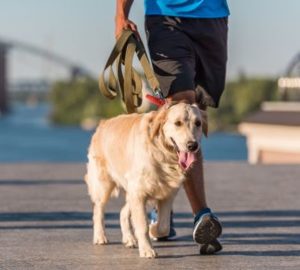
Man walking a golden retriever dog on leash. Gazing outside from behind the dreary landscape of our desks, few are the people who can say they’ve never given a thought to a career change that involved working outside–river guide, perhaps, or a rancher or deckhand on a luxury liner. For many dog lovers, those rosy-tinged, outdoorsy dreams concern dog walking. A life of easy days, surrounded by nature and happy pooches—but in reality, there’s much more to the job.

dogbiz runs a certification program for dog walkers, called the Dog Walking Academy, and over the years we have seen people from every thinkable vocation—lawyers and computer programmers, sales reps and accountants, nurses and writers, ex-military personnel and classical musicians—give up their previous, often very successful, careers to walk other people’s dogs. And yes, if you love dogs and worship the outdoors, if you yearn to be your own boss and don’t mind being your own office manager, marketing exec, and customer service representative to boot, dog walking just might be for you. That said, if it seems as easy as slapping a leash on a few dogs and going for a stroll you’ll likely be surprised.

In today’s densely populated, greatly regulated, and litigious world, in which people’s pets are integral to the family like never before, good, safe dog walking demands technical skill, physical stamina, and in-depth knowledge of everything from dog behavior and pack management to canine first aid and trail etiquette.

There are advantages, of course. The freedom, for one thing—a dog walker starts her day at whatever time suits her and doesn’t have to dress up for work. For another, there’s the daily shower of love. In each house on his route, a dog walker is greeted by his charges with an enthusiasm quite unequaled by anything known in the corporate world. And for the type of person best suited for dog walking, the time on the sidewalk or trail—or at the beach or dog park—is what makes it all worthwhile. Aside from the obvious physical and mental health benefits of fresh air, exercise, and being in a tranquil natural setting for hours every day, some walkers talk of the sheer pleasure of watching dogs sniff and romp. For anyone with an interest in dog behavior, dog walking is fertile study ground, whether it’s a single leashed dog navigating a busy street or unconstrained play and group interaction on a trail far from the city center.

That, however, bring us to what dog walkers often rank as the worst part of the job: the driving. The grind of going from house to house to collect dogs is fine at the outset, but it wears you down over time—how many happy taxi drivers have you met in your life? Most dog walkers keep the driving to a minimum by choosing clients within a limited geographical area and timing their driving cycles to avoid heavy traffic. Still, if you’re considering dog walking as a career, expect to spend at least as much time in the car as on the sidewalk or trail.

If traffic is impossible to control, so is the weather, and as with any outdoor work, bad weather brings its own set of trials for dog walkers. Soaked, muddy dogs have to be cleaned up before they can be let back into their homes, so count toweling off and possibly hosing down each dog plus washing loads of dirty towels as part of the job, too. And finally there’s the loneliness inherent in a job that comprises minimal human contact.

These are the pros and cons most people juggle when they consider dog walking. Freedom, exercise, and doggie love are the major pluses, and too much driving, occasional bad weather, and scant human contact are the minuses. That, however, is not all there is to dog walking. First of all, it is a business like any other and as such it involves paperwork, customer service, marketing, accounting, and so on, all of which the walker has to find time for outside of the hours he or she spends walking and driving. Secondly, it is a common misconception that dog walking is easy. It might be, if you are walking two arthritic dachshunds that you know well, but that won’t pay the rent. Or even buy the movie tickets.

No doubt this fallacy stems from the humble beginnings of dog walking. Once upon the 1950s and 60s we simply paid the kid down the street a dollar to get Fido out for us. As we have packed into tighter urban spaces, the risks involved in little Jimmy walking Fido no longer allow for that solution, but pet owners have even less time to walk Fido, who needs regular, vigorous exercise over and above what he can get in our smaller and smaller backyards. Hence the birth of professional dog walking. And a professional is what it takes to safely navigate dogs through densely populated areas and heavily used natural spaces.

As Mik Moeller, a Dog Walking Academy founder and instructor, puts it, “To manage and train a group of dogs–or even a single one– is much more difficult than people realize. Nobody is surprised that training a sled dog pack requires expert knowledge and skill. I don’t know why anyone thinks dog walking is different.”

Many walkers start out with just their outdoor dreams, a love of dogs, and the experience of walking their own pets, and soon realize the job is also about dog training and being responsible for the safety of someone else’s beloved companion. It’s about interacting with other sidewalk and trail users (some of whom are not dog lovers) in a responsible fashion and having the appropriate licenses and insurance, knowing when and how to say no to a client whose dog would fit badly into your particular group or service, knowing what to do if a fight breaks out on the trail or an unleashed dog rushes you on the street, structuring your route to cut down on driving time and gasoline consumption, and so on.

Despite the challenges, most dog walkers think they have the best job in the world. As one Dog Walking Academy graduate said, “My worst day on the trail is better than the best day in my old job.”

It is pointed out too rarely what a great contribution dog walkers make to the quality of life of the dogs they serve. Instead of being home alone all day, these dogs are given crucial exercise and social interactions, which isn’t just healthy, it keeps dogs safe and in permanent homes, too. Studies show that many dogs given up or returned to shelters are there because of normal expressions of boredom or lack of exercise: barking, chewing, excess energy, and so on. Dogs are doing their level best to fit into our twenty-first century lifestyles, the least we can do in return is to take their physical and mental health seriously. That means entrusting your pet to a professional.

If You Want to Walk Dogs

  • Get educated and certified. Learn dog body language, walk management techniques, building a strong recall, fight prevention and protocols, canine first aid, group composition, business practices, etc.
  • Start a legitimate business—get your business license and other necessary paperwork, obtain professional insurance, and research the rules for walking in your area.
  • Talk to other certified professional walkers to learn of their experiences and ask to join them for some hands-on experience.

Learn more about the dogbiz Dog Walking Academy.

A Dog Walker’s Checklist

Professional dog walking has grown rapidly over the last ten years, and the collapse of the economy has sent a new flood of dog lovers into the field. Because walking is a young business, there is currently no regulating body to dictate the standards of care or qualifications for the work.

But walking dogs, particularly in groups, takes more than the passion we all share for them. There are specialized knowledge and skill sets, as well as ethical business practices, necessary to ensure the safety of the dogs in your charge, as well as yourself and the other dogs and humans who share the beaches, trails, parks, and sidewalks.

Here are ten questions to ask of yourself, whether new to walking or already enjoying your career with the dogs.

1. Are you trained in canine learning theory, body language, and pack management?
You want to know how to: a) use scientifically sound, humane training methods; b) read body language and take appropriate steps to prevent fights (and properly break them upwhen need be); c) judge which dogs to place together for maximum compatibility; and 4) handle issues like quarrels over toys, space, or play styles. In short, you want a professional knowledge and the skill set to keep the group together and under control while everyone has a great time. Of course, a love of dogs is imperative — but not enough on its own.

2. How many dogs do you walk at once?
Some cities, counties, and park districts now regulate the number of dogs a walker can take out together. But most do not. This means that some walkers are escorting six or eight dogs, while others are walking as many as 15 and even 20 together in public spaces. Whether on or off leash, each dog added to a group increases the potential for conflict, injury, lost dogs, and distraction – not to mention making individual attention neigh impossible.

3. Do you walk alone?
A walker’s job is to keep the dogs in your care safe and show them a good time. This means keeping vigilant focus. Teaming up with a friend can be fun, but it inevitably reduces attention. If that friend is also a dog walker, going out together combines two sets of dogs, making the pack too large for maximum safety. For best results, hit the trail with dogs, not other people. For similar reasons, cell phones and other potentially distracting devices should be turned off during dog walks.

4. Do you do the walking?
Most dog walking companies are very small — the sole proprietor is the sole walker. Some have multiple employees, however. If that’s you, insist your walkers follow the same ethical practices you do, and either hire well-trained walkers, or provide thorough training before sending employees out on their own.

5. What size dogs do you walk together?
Walk small dogs with other smalls, and the same for big ones. It’s too easy for small dogs to be injured during the course of play with and among their larger peers. And the risk of predatory drift, in which one dog attacks and even kills another, is much higher than is generally realized. This tragedy can — and most commonly does — happen between dogs who know each other and generally get along well, even for years. It’s safest to stick to the 50% rule. For example, if you walk a dog who weighs 30 pounds, his playmates should weigh no more than 60 pounds.

6. How much time do you guarantee on the walk?
If your service includes transporting dogs, make sure that the time you quote is time out of the vehicle, roaming and having fun. The car ride shouldn’t be included. And always give Fido her full due unless weather makes renders conditions unsafe.

7. What kind of training methods and equipment do you use?
The American Veterinary Medical Association and the American Society for the Prevention of Cruelty to Animals recommend only positive-reinforcement based training. Learn how to keep a group of dogs under control and safe without the use of choke, prong, and shock collars; citronella or water spray; hitting, shoving, or yelling. The dogs in your care are supposed to have a good time out there. We don’t allow teachers or camp counselors to spank children. A professional walker shouldn’t need to resort to such measures, either.

8. Are you licensed, insured, and bonded?
Any walker using the word “professional” should carry dog-walking insurance and have a business license. And if you have employees bond them as added protection for you and your company.

9. Do you have a professional service contract and references?
Ask all clients to sign a contract to help avoid later conflicts and to protect your liability should something happen to the dogs in your care, or should they inflict damage on a third party while in your care.

10. Are you certified to provide canine first aid, and what are your emergency protocols?
What will you do if a dog is injured in your care? If you walk groups, what will you do with the rest of the dogs if one member of the group is hurt and requires your full attention? What about if your vehicle breaks down, if a dog is lost, or if a natural disaster occurs? Always carry emergency information and know the fastest route to the emergency veterinary clinic. In short, be prepared.

We are currently seeing an explosion of dog walkers and dog-walking companies. It is, after all, a wonderful way to make a living. If it’s the path you choose, set yourself up to enjoy the most worry-free experience, knowing that you are taking the best care possible of the four-leggeds in your care.


Become a dog walker or advance your existing experience and business at the dogbiz Dog Walking Academy.

Dog Walkers, Meet Dog Trainers—It Could Be a Match Made in Heaven

By Nan Arthur, San Diego and Ventura, CA Dog Walking Academy instructor and owner of Whole Dog Training

As a dog trainer, I can attest that many trainers and behavior experts wish there were some sort of dating-like service to help them find the perfect match. Not for dating, of course, but to help connect with experienced dog walkers and pet sitters for the invaluable service you can provide when dealing with specific training and behavior issues. Dog walkers would benefit from such a service, too, to help find qualified trainers to assist when you’ve let a client know some extra help is needed. And everyone wins from the referrals such networking brings.

Unfortunately, finding competent professionals can be challenging in an unregulated industry. Here are some tips for successful industry “dating.”

Finding the Match
Long before online dating services were abundant, people had to meet, get to know each other, test the waters with dinner, maybe a movie, and then decide over time if the relationship should move forward. Finding trainers and behavior experts who fit the needs of pet care professionals, and vice versa, is a similar undertaking.

Start by constructing a list of open-ended questions you need answers to (think of this as setting up your dating profile), interviewing prospective trainers (the dating stage), and finally getting and contacting references to find the behavior professional who’s the right fit for you. It’s a bit of work, no doubt, but your business, your clients, and their dogs will be affected in the long run, and that makes it time well spent.

Fortunately, there are a few organizations that help to simplify the process so you can begin the without quite as much stress—whichever side of the profession you’re on:

For the dog training/behavior community looking for pet care pros, dogbiz is the first on the list. dogbiz developed the Dog Walking Academy, an international program which educates and certifies dog walkers and pet sitters with a three-day, hands-on program that includes safety, business practices, first aid certification, and positive reinforcement training practices for leash walking and more. Graduates are held to an agreement that includes humane training equipment and handling practices, helping force-free dog trainers find pros to support their positive training practices. Pet Sitters International is another organization that offers membership and insurance, but they don’t vet their members, so careful interviewing is important.

For pet care professionals looking for support and referrals by connecting with dog trainers and behavior experts, there are several organizations to get you started. The Karen Pryor Academy has a list of certified dog trainers in the U.S. and around the world, and the program’s certified training partners also sign an agreement to use and endorse only positive methods. Other resources include the International Association of Animal Behavior Consultants, an organization that certifies animal behavior consultants who adhere to humane practices. The Certification Council for Professional Dog Trainers certifies both professional dog trainers and behavior consultants, using the same sort of humane guidelines.

Each of these organizations will point you toward qualified people you can refer to when the dogs in your care require training or behavior modification.

Benefits For All
Dog trainers and behavior experts often deal with dogs who need more than just the typical hourly training appointment. As part of our training plans, we often recommend more exercise, or ongoing visits due to separation anxiety, house training, medication visits, and more. If the pet parents can’t provide what the dog needs to help them past their behavioral challenges, a qualified dog walker is a necessity to the success of the training program.

Having reliable pet care professionals to refer clients to for help maintaining training plans is a great asset to trainers. If you are that go-to professional for a trainer, it can be a boon to your business. Trainers are routinely asked about other services the dog owner needs, and if yours is the first name on that trainer’s list, you will reap the benefits even when you aren’t needed as part of a behavior plan. Trainers often share the names of trusted referral partners with each other, too, bringing the potential of even more business.

The First Date
An interview with a potential pet behavior professional should include a list of open-ended questions. These types of questions lead to “the story,” rather than simple yes or no answers.

A good example of an open-ended question would be, “What are your favorite tools in your equipment toolbox?” Contrast that with, “Do you ever use pinch collars?” The former gives you more information about the person’s preferred equipment, and you can start a dialogue about the reasons you don’t prefer pinch collars. By contrast, the latter results in a yes or no answer that might place the person on the defensive. It might even lead the person to hide important information from you.

If you’re hoping to team up with someone to handle the behavior needs of a specific dog, ask questions about the needs of that dog and his owner. Does this professional have experience dealing with the specific behavior issue the client is hoping to address? What will her approach be? Get the details you need by asking the right kinds of questions. If your goal as a walker is to improve the dog’s manners on leash, will the trainer invite you along to the session so that you are able to learn her strategies and reinforce the work she is doing during your walks with the dog? On the business end of things, ask about their liability insurance and what it covers. Do they carry bonding insurance for employees? What type of business entity are they—an LLC or sole proprietor? Do they have a current business license on file? People who run legitimate businesses should be able to answer these questions with clarity and confidence.

In addition, the Internet is your friend. Doing a name and business name search for the person you are considering is important. Check sites like Yelp, look at the quality of the website—no website? Move on! —and then ask for references from current clients and at least one peer, and call them to ask the same kinds of open-ended questions you would ask the potential partner.

Finally, if all looks good, schedule a meet-and-greet between the trainer and your client. This is critical. You are recommending a professional to handle issues that lie beyond the scope of your role as a pet care professional. Your client needs to feel comfortable with not only the person but also the person’s credentials, so be sure to provide their experience and any certifications to your client.

This dating process does require a lot of work, but if you are truly looking for that perfect match (and sometimes several for different clients and situations), taking the time to get the relationship right will benefit both your clients and your business.

Learn more about the dogbiz Dog Walking Academy.

Emergency Prevention, Planning, & Protocols for Dog Walkers

Taking care of other people’s best friends means living with the chilling prospect of emergencies. Dog walking emergencies can come in all shapes and sizes, from a vehicle break down to a sprained ankle to potentially traumatic accidents. Out on a trail, an otherwise reliable dog takes off chasing an unknown scent and is lost or hit by a car. Two dogs who normally play well together get into a nasty fight. A dog you are walking swallows a rock or other non-edible item whole. All are scenarios that make dog walkers sweat. But failing to consider and prepare for accidents makes them more likely and will only aggravate an already bad situation if it happens.

Your clients, the dogs, your staff, yourself—everyone is better served by a 3 P’s approach—taking deliberate care to prevent emergencies, planning for their eventuality (life does happen, after all), and having set protocols to follow for each type of emergency to stave off panic and keep things under control.

Emergency Prevention
Preventing emergencies is much easier than dealing with them. And preventing emergencies is really a matter of following good dog walking practices:

Set the tone. A dog who is calm and focused on you is less likely to be involved in an emergency. Consistently asking your charges sit to greet you and leash up, sit and wait at doorways and curbs, walk nicely on a loose leash instead of pulling, etc. will make your days both easier and safer.

Walk dogs, don’t socialize them. You can’t bite what you’re not near enough to reach. Live beings—both humans and other dogs—are unpredictable. Use strong recalls and focus techniques (like “Let’s go!” or “Watch me!”) to keep dogs interacting with you instead of strangers or dogs you don’t know. When appropriate, pull over to the side for a focused sit-stay to allow others to pass. Politely decline requests to pet your dogs, even if you know them to be friendly. They may well be, but every dog has her limits and you never know when a well-meaning but blundering dog lover will find one of them.

Practice good screening and group composition. Choosing the right dogs—and matching them carefully if you’re a group walker—can go a long way toward avoiding fights and other emergencies. Always decline dogs with behavioral challenges that are beyond your skill and knowledge set, and avoid more than one challenging dog (we call them project dogs) per group, at most.

Actively monitor and interrupt. When walking groups, interrupt play or other interactions before they tip into conflict. Frequent obedience breaks (such as practicing circle stay pull-overs), and calling dogs (recall off leash or “Let’s go!” on leash) to break up potentially heated interactions, keeps things light and fun. Think of it a bit like monitoring a group of children—it’s best to initiate a break in play before a squabble breaks out.

Keep up on vehicle maintenance. The only thing worse than your car breaking down is your car breaking down with dogs in it! Maintain roadside assistance, schedule routine maintenance, and head to the shop at the first sign of trouble. Treat your vehicle like the key business investment and tool it is.

Watch the temperature. NEVER leave dogs in your car other than to pick up other dogs. Keep your keys with you, and the windows cracked. If you live in a particularly warm area, outfit your windows with dog-proof screens that keep dogs in, hands out, and air flowing.

Use proper equipment. To avoid a startled dog breaking free from you, secure leashes to head harnesses, body harnesses, or martingale-style anti-slip collars. Never use flexi-leashes, as they are too easily pulled out of your hand by a bolting dog, and can also cause serious injury to you and the dogs you walk. Be sure all dogs wear a large tag with your cell number to expedite a quick reunion with a lost dog.

Emergency Planning
Being prepared keeps emergencies contained when they do happen. Better a small emergency than one that blooms into a crisis.

Carry a 1st aid kit—and know how to use it. Keep a full kit in your vehicle and a small kit on your person as you walk. Visit DogSafe or PetTech websites for canine 1st aid kit information and to look for 1st aid classes if you are not already certified.

Always have client contact information on hand. You should never have to rummage frantically through your vehicle for your phone list or, perish the thought, go home to get it. Keep up-to-date, well-organized client contact details in your car or phone at all times, and require any staff to do so as well.

Program emergency vet phone numbers into your phone. Write down or program into a work phone emergency directions to the closest vets from your most-used trails or the neighborhoods you service and keep them in any car ever used to transport dogs. Make sure all staff members know where to find the directions and understand them. Even if you work solo and you know the directions well, have them pre-programmed into your phone or GPS. When a crisis hits, it’s all too easy to forget one’s own name, let alone how to get to the veterinary hospital.

Get permission to help in writing. Your client service contract should clearly spell out what’s expected of you in an emergency.

  1. Have clients give you permission to seek emergency treatment and agree to cover the cost.
  2. Have clients specify whether there’s a cap on the cost they will accept. (Don’t assume everyone shares your willingness to take out a second mortgage to pay for surgery.)
  3. Have clients specify whether they authorize you to take the dog to whichever vet or animal hospital is closest. In other words, they want you to exercise discretion in getting their dog the best, fastest care. Otherwise, they may refuse to pay because you didn’t use their vet.
  4. Have clients state their wishes with regards to resuscitative care. For example, some clients may not wish to have senior dogs resuscitated.

Recruit an emergency assistant. One way to prevent panic in an emergency is to have a person to call who can help you keep calm and assist with urgent tasks. Don’t just make a mental list of cool-headed friends, though. Your emergency assistant must know and agree to his or her new designation, and the two of you should set up a protocol for such calls. Maybe it’s her job to meet you at the vet clinic and provide general support. Maybe she is the one who takes the other dogs home. Maybe she finishes your walking stops for the day. Whatever it is, you always know that someone can come to your aid. You and a fellow dog pro can do this for each other, or you can ask a friend who works from home or has a flexible office schedule.

Take your emergency assistant out with you on your regular rounds so she can meet all the dogs. Then practice your emergency protocol with your assistant to make sure everything goes as planned when you really need it to.

Emergency Protocols
Knowing what to do in an emergency will help keep you calm. And being calm will allow you to more effectively handle whatever situation comes your way.

At the Dog Walking Academy we provide step-by-step protocols for handling all manner of emergencies, including vehicle breakdowns, you being injured or becoming ill during a walk, a dog in your car biting another dog or person, and losing a dog. We encourage our grads to carry these protocols with them, giving them a clear path forward should panic or shock set in. If you don’t have specific emergency protocols, take some time to develop them—or come join us for the Dog Walking Academy.

Secure dogs and call your emergency assistant. Regardless of the situation, one important step in any protocol when walking groups is to secure all dogs to keep the situation from escalating. The last thing you need while dealing with an injured dog or sprained ankle is for another one to take himself off on an adventure. Get everyone safely leashed if they aren’t already, then call your emergency assistant. In most protocols, your emergency assistant is the first call you’ll make. Knowing someone is in your corner and on the way to help can do a lot to bring calm, no matter the emergency.

Communicate with the client. Call the client when you have calmed down, not before. Also hold off until you know the precise nature of the damage. Sprained leg or amputation? Eye patch for a few days or blindness? Best to find out before you make the dreaded call. When you do, speak in a calm, confident tone. A distressed owner needs to know a professional is in charge of the crisis. Clearly state whether everything is handled and this is just a courtesy call to let the client know, or whether some action on her part is required.

With any kind of mishap, even if everything turned out fine, the best policy is to tell the client. Some clients might not care that their dog was missing for 20 minutes on a deer-chasing adventure, or that he got into a scuffle in which no one was hurt, but that risk is preferable to a client who hears it from someone else and is outraged at your failure to tell her about the dramatic event, regardless of the outcome. And if running off or scuffles become a trend, your client may be angry to learn something’s been brewing and wonder why you didn’t let her know sooner.

Take responsibility as appropriate—you are an adult and a professional. But don’t verbally rub sand in your hair, don’t heap blame on yourself, and don’t ever tell the client they ought to sue you. Accidents happen. Dogs are not appliances.

Depending on the situation, here is a possible strategy for the conversation: describe in a straightforward manner exactly what happened, share all the steps you took to handle the situation, give a report of the current status of the dog, and share anything you plan to do (if relevant) in the way of policy or process changes to avoid something similar happening in the future. Stress your concern for the dog’s and the client’s well-being, and ask if there’s anything else you can do to be of support at this particular moment.

Emergency Follow-up
If the worst happens and a dog is seriously injured or killed while under your care, let your other clients know in writing. Bad news travels fast and if you are not the one to tell them, they may think you’re trying to hide the episode. You have to protect your business and your brand, and honesty is the best policy.

The letter should include any policy changes you are making to prevent the same thing happening again. Be thoughtful about protecting anonymity; don’t hang clients out to dry. If a dog is expelled, for example, don’t name that dog. If a dog is killed, find out whether the owner wants the dog named or not. Some do, some don’t. But don’t name the dog who killed, just say he was expelled.

Openness is the best policy about smaller incidents, too. A scuffle in a walking group that results in a dog needing a couple of stitches, for example, should also be communicated. Doing so breeds confidence, prevents rumors from festering and growing, and demystifies normal canine behavior. Emphasize what is being done about the problem: “We had another tiff over tennis balls today, so we have decided not to bring them to the beach with us anymore.” Hopefully, you are communicating with your clients every week anyway (highlights from Fido’s week, etc.), so bad news isn’t the only news they get.

(Of course, if scuffles happen more than once in a blue moon, something is wrong. Screening procedures and staff training are the first places to look for a possible issue.)

Don’t fret
If you generally run a strong business, if you take good care of dogs and of people, if you handle a crisis with responsibility and grace, it’s rare to lose clients over injury incidents. Be open and honest, be calm, and face the situation down—it can happen to anyone.

5 Tips for a Successful Dog Walking Business

Person walking on a large dog on a multi-colored leash.Running a small business is hard work, even when you get to spend many of your business hours outdoors with cheerful canine companions. Given that it’s that part of the job—the dog part—that you’re probably in this for, you want to make sure you have plenty of dogs to walk. And we want to make sure you’ve got plenty of income to sustain you, too, so you can keep walking those dogs for many years to come. Understandably, most dog walkers give short shrift to the business part of owning a dog walking business. But if you mean to do this for your long-term living, your business requires the same loving attention you give to those cheerful dogs in your care.

Here are 5 key biz tips to help you run a successful, thriving dog walking business:

1. Charge pro rates
Want to get more clients? You probably need to charge more. Nope, that’s not a typo. Most dog walkers undercharge, worried that no one will hire them unless they’re cheap. The reality is that serious dog owners want the best dog walker, not the cheapest one. Your rates are part of your marketing message, and a low rate can signal low quality—and that means being passed over by committed clients.

Another good reason to raise your rates is your own economic longevity. You’ll stay in business longer, and enjoy it more, if you’re on solid financial ground.

2. Protect your income with good policies
Poor policies are one of the most common mistakes in the dog walking industry, and a leading contributor to companies folding under financial stress. Allowing clients to use your services on a drop-in basis, and cancel at will, means streaky, unpredictable revenue. Set policies that draw the right clients to your service—clients who need regular, ongoing support. This includes requiring dogs to walk with you on a set, regular schedule. It also includes a strong cancellation or “excused absence” policy that limits the amount of days per year you go without being paid.

3. Get clients (aka marketing)
It may not be on your list of favorite ways to spend time, but marketing your dog walking business is critical to its success. If your marketing plan consists of either a “Someday when I have time” to-do list, or maintaining your FB page or Instagram account, it’s time to step up your marketing game. Social media marketing is a great piece of a comprehensive marketing plan, but it won’t be sufficient on its own to build your dog walking business unless you have lots of time to wait. People have to know you exist first in order to follow you. Building referral sources in your community (vets, pet supply stores, dog trainers, fellow walkers, etc.) and finding creative ways to let people know you’re there (print newsletters, trading cards, how-to-choose-a-dog-walker fliers, etc.) are important aspects of a well-rounded marketing plan.

4. Be picky
If you mean to be in this for the long haul, set yourself up for daily enjoyment and success. And that means being picky about the clients you take—both human and canine. Don’t let your love of dogs lead you to walk dogs who get under your skin, make your day hard, or who you feel are not safe. It really is okay to say no—and saying no is often in the client’s and dog’s best interest, too. And be ready to let difficult human clients go—those who take up more than their fair share of your time, energy, or patience, or who treat you with less than the professional respect you deserve as the care giver for their four-legged family member.

It can be stressful or even painful to say no to or let a client and dog go. But that momentary discomfort is far better for you and for the longevity of your business than the daily frustration and stress of either walking a dog who is a poor match for you or dealing with a challenging client.

5. Seek a pro education
Thankfully we are moving past the days when you paid the kid down the street a few dollars to walk your dog. But we are still well short of reaching professional status in our industry. In this middle ground space, it’s left up to us whether to seek a professional education in dog behavior. If you’re serious about dog walking as your profession and career, set yourself apart with a solid education. Professional education elevates you in your community, providing a marketing edge by signaling your seriousness to potential clients. It can also make your daily work with dogs easier, more enjoyable, and safer for all.

Running a small business will always be hard work. But running a thriving dog walking business makes it all worthwhile—and that means caring for your business with the same dedication you show the dogs.

Check out the Dog Walking Academy to learn more.