
Bob

What’s In a Name? Choosing a Name for Your Dog Business

Over our years supporting dog pros, we’ve noticed certain sticking or stress points common to many of our clients. Choosing the perfect business name ranks high among those.

choosing a business nameWe’ve been thinking a lot about business names lately. You may have noticed we’ve undergone our own name change from dogtec to dogbiz, and a bit of a visual branding update as well. It’s actually not our first name change and brand polish. Some of you may remember the original version of dogtec way back when we were dogTEC and sported multi-colored stripes. Back then the TEC in dogtec was an acronym that we quickly grew out of. (Extra points to those of you who remember what it stood for!) While we dropped the longer name and eventually de-capitalized the TEC, there was always the wish in the back of our minds that we’d had a crystal ball when we first started. If we had, we’d have called ourselves dogbiz from the start and saved ourselves the hassle of being mistaken for a software company or veterinarians!

But enough about our name—what about yours? Here are some tips on choosing a great dog business name:

A few words of caution and cheerleading
Unless you choose really, really badly (i.e., a name with sexual innuendo, for example), your business name won’t break your business. Really, it won’t. It can feel like the most important decision, but it’s far less important to your success than many other things—like doing your marketing, for example, or providing good customer service. (We’ve had 15 years of success with a name that really didn’t make sense!) So try not to let this decision lead to an ulcer; as a small business owner you have far bigger fish to fry.

Also, keep this thought front and center throughout your naming (or renaming) process: This isn’t for you. It’s for your clients. You don’t have to love your business name. It doesn’t have to be the most perfect, most clever name ever. You don’t have to nail this. And it’s really hard to. Thousands of people have been through this process already. It’s going to be hard, if not impossible, to come up with something truly unique. That’s okay. We just need it to work, and there are lots of ways to do that.

What makes a good dog business name?
Make it memorable. Your name should be something that’s easy to remember. That might be because it’s clever or funny, like the dog walking company in Edson, Alberta called Poop’d Out. It might be due to alliteration or rhyming, like Dynamite Dogs. The point is, with a little repetition your community should be able to call up your name.

Keep it short. The shorter your name, the easier it will be to recall. Avoid lengthy names that require acronyms (unless the acronym stands well on its own). Avoid names that attempt to explain all you do—they don’t have to. (Nike certainly doesn’t!) Just generally avoid anything overly long or complicated.

Think about tone and audience. What services are you offering, and how do you want to be perceived? Your name is part of your brand, after all. Wags ‘n’ Whiskers works well for a pet sitting company or animal supply shop, but less well for a dog training business specializing in serious behavior issues. Write down a handful of words you want to come to clients’ minds when they think of you. Caring? Professional? Warm? Expert? Be sure the tone of your name reflects the values you intend.

Avoid inside jokes or meanings. Again, your business name is for your clients and referral sources, not yourself. If you have to explain it, it’s probably not a good idea. That includes training methodology/ philosophy references!

Leave room to grow. Maybe you’re a dog walker or pet sitter now. Are you sure you won’t continue your education and eventually study to become a dog trainer? Or your training business is focused on puppies now, but will this remain your direction? Unless you’re sure about your niche, choose a name that’s broad and open enough to allow room for you and your business to evolve.

Types of business names
One thing that can help you find a name is thinking about the various categories of business names. Here are some for thought and inspiration:

Puns and other wordplays. We start here because this seems to be where most people look first. It’s a hard one, though, because most the good puns and wordplays are already taken (many times over!), and because they can backfire, too. It’s hard to be memorable when your name is a variation on a common theme. For example, if your community is already full of dog businesses spelling Positive as Pawsitive, adding yourself to that mix can leave you lost in the crowd. On the other hand, a unique pun well suited to your business can be a great find. For example, a canine warm-water and exercise therapy business in California calling itself The Rex Center (a play on Rec Center) is brilliant: relevant, clever, short, and memorable.

Local references. As we said, those sorts of Yes! moments in naming a dog business can be hard to come by. An easier strategy might be naming your business based on your location. This approach can help endear your community to you, particularly in areas that are fiercely local. (Just be sure when using this strategy that you intend to live where you do now for the long haul.) You can use your actual city or county or state name in your business name. Or you can make use of a local moniker, such as a neighborhood name or a regional nickname (such as PDX Pet Sitting—PDX being local shorthand for Portland, Surf City Dogs in Santa Cruz, CA, or Southern Mutt, a dog training company in Chattanooga, TN). You can also reference a local landmark, such as a mountain range or river or valley or famous site, like Golden Gate Dog Walking.

Your own name. Using your own name is a simple way to arrive at a business name, as in Peggy’s Pet Sitting or Dan’s Dogs. This tends to be tempting when there’s alliteration involved, but it’s not necessary. For example, Kathy Santo Dog Training. In fact, how you use this strategy matters a lot. If your business is more on the dog care side, like pet sitting, using just your first name and some alliteration (if the opportunity is there) can certainly work. But you have to be careful in your visual branding (logo, website, etc.) not to go too kitschy or look homemade, as you may undermine a sense of professionalism. For dog trainers, using your own name can lend a sense of authority and gravitas, so long as you avoid anything that sounds too cute (which probably means avoiding alliteration and thinking about using your full name).

Descriptive. We’ve said your business name does not have to describe what you do, and it doesn’t. People will encounter your name in context, giving it meaning. They’ll see it on your website, or print marketing material. They’ll see you wearing it on a shirt while walking or training a dog. That said, descriptive names are another category to consider. For example: Canine Behavior Solutions for a dog training company specializing in behavior. Note that what makes this name work isn’t just that it describes what the business does, though—it works because it describes the benefit the business provides—in this case, solutions to behavior problems.

Niche names. If you’ve nailed your niche, you might use it to your naming advantage. SF Puppy Prep, for example, is a San Francisco business specializing in puppy training. Or Canine Trail Adventures for a dog walking company that takes dogs out of the city for trail hikes. Or dogbiz, for a company that helps dog professionals succeed in their businesses.

Creative. We started by talking about how important it is that your name be memorable. A creative name might be whimsical or abstract, such as The Art of Dog. This is a San Francisco dog walking and daycare company that specializes in small dogs. There’s nothing in their name that would indicate any of that, but it’s very effective. It’s memorable, short, and suits the local culture perfectly.

Finding your name
If considering these various name categories still hasn’t led to your eureka moment, here are two strategies for landing on your business name:

Throw a party. Invite your most clever, creative friends, family, and co-workers (unless you haven’t yet told them of your new career plans!) to a naming party. Have a white board or large sheet of butcher paper handy. Pass out snacks and drinks, then call your party to attention. Describe for your assembled guests what you’re up to. Tell them about your services and your ideal clients. Tell them how you want to be perceived in your community. Share your brand value words. Give them instructions about anything you want to avoid (such as common industry words you don’t want to use or shying away from anything too cutesy). Then pick up your marker to capture all ideas and let the brainstorming begin!

Hold a contest. Use email or social media to challenge your social circle to come up with your business name. Again, share all your do’s and don’ts and guidelines as above. Give people a deadline and tell them what the person who comes up with your name (or submits an idea that sparks the final name) wins. Maybe a batch of your famous, coveted chocolate chip cookies, for example?

Don’t despair if your party or contest doesn’t land on the perfect solution right out of the gate. Sit down with your resulting list of ideas and strike through any options that are clear no’s. Circle any that are maybes or that suggest an interesting direction. Then walk away for a few days before coming back to your list with fresh eyes. You’ll likely be pleasantly surprised by something jumping out at you—either a suggestion you had initially overlooked, or one that sparks a great idea of your own.


Still struggling after all that? Consider a consult with one of our friendly business consultants; we’ve got a great track record of helping clients nail business names (even if it took us 15 years to get our own right!).

 

5 Tips for a Successful Dog Walking Business

Person walking on a large dog on a multi-colored leash.Running a small business is hard work, even when you get to spend many of your business hours outdoors with cheerful canine companions. Given that it’s that part of the job—the dog part—that you’re probably in this for, you want to make sure you have plenty of dogs to walk. And we want to make sure you’ve got plenty of income to sustain you, too, so you can keep walking those dogs for many years to come. Understandably, most dog walkers give short shrift to the business part of owning a dog walking business. But if you mean to do this for your long-term living, your business requires the same loving attention you give to those cheerful dogs in your care.
Here are 5 key biz tips to help you run a successful, thriving dog walking business:

1. Charge pro rates
Want to get more clients? You probably need to charge more. Nope, that’s not a typo. Most dog walkers undercharge, worried that no one will hire them unless they’re cheap. The reality is that serious dog owners want the best dog walker, not the cheapest one. Your rates are part of your marketing message, and a low rate can signal low quality—and that means being passed over by committed clients.

Another good reason to raise your rates is your own economic longevity. You’ll stay in business longer, and enjoy it more, if you’re on solid financial ground.

2. Protect your income with good policies
Poor policies are one of the most common mistakes in the dog walking industry, and a leading contributor to companies folding under financial stress. Allowing clients to use your services on a drop-in basis, and cancel at will, means streaky, unpredictable revenue. Set policies that draw the right clients to your service—clients who need regular, ongoing support. This includes requiring dogs to walk with you on a set, regular schedule. It also includes a strong cancellation or “excused absence” policy that limits the amount of days per year you go without being paid.

3. Get clients (aka marketing)
It may not be on your list of favorite ways to spend time, but marketing your dog walking business is critical to its success. If your marketing plan consists of either a “Someday when I have time” to-do list, or maintaining your FB page or Instagram account, it’s time to step up your marketing game. Social media marketing is a great piece of a comprehensive marketing plan, but it won’t be sufficient on its own to build your dog walking business unless you have lots of time to wait. People have to know you exist first in order to follow you. Building referral sources in your community (vets, pet supply stores, dog trainers, fellow walkers, etc.) and finding creative ways to let people know you’re there (print newsletters, trading cards, how-to-choose-a-dog-walker fliers, etc.) are important aspects of a well-rounded marketing plan.

4. Be picky
If you mean to be in this for the long haul, set yourself up for daily enjoyment and success. And that means being picky about the clients you take—both human and canine. Don’t let your love of dogs lead you to walk dogs who get under your skin, make your day hard, or who you feel are not safe. It really is okay to say no—and saying no is often in the client’s and dog’s best interest, too. And be ready to let difficult human clients go—those who take up more than their fair share of your time, energy, or patience, or who treat you with less than the professional respect you deserve as the care giver for their four-legged family member.

It can be stressful or even painful to say no to or let a client and dog go. But that momentary discomfort is far better for you and for the longevity of your business than the daily frustration and stress of either walking a dog who is a poor match for you or dealing with a challenging client.

5. Seek a pro education
Thankfully we are moving past the days when you paid the kid down the street a few dollars to walk your dog. But we are still well short of reaching professional status in our industry. In this middle ground space, it’s left up to us whether to seek a professional education in dog behavior. If you’re serious about dog walking as your profession and career, set yourself apart with a solid education. Professional education elevates you in your community, providing a marketing edge by signaling your seriousness to potential clients. It can also make your daily work with dogs easier, more enjoyable, and safer for all.

Running a small business will always be hard work. But running a thriving dog walking business makes it all worthwhile—and that means caring for your business with the same dedication you show the dogs.

Check out the Dog Walking Academy to learn more.

Troubleshooting Day Training

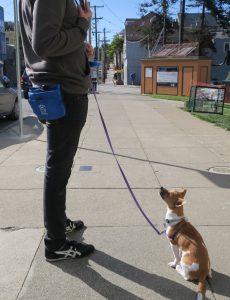
Dog on a leash looking up at a person holding the leash.The benefits of day training are many and powerful. For you, easier marketing and sales, better income, better case outcomes, increased personal satisfaction, and you actually get to train dogs. For your clients, convenience, better and faster results, and more long-lasting results, too. For the dogs, better treatment and increased bonding with their people. After all, the fastest way to improve the relationship between a client and her dog is to change the dog’s behavior. Gaining client compliance for change on their end becomes much easier when you’ve provided results to protect.

As with any service, though, day training presents its own challenges. While the benefits far outweigh those challenges, why live with downsides if we don’t have to? Here are some solutions to the common challenges trainers encounter when beginning to day train:

TRAINING SESSION CHALLENGES

Challenge: Proofing
A central point of day training is getting more training done than the client could, and doing it better. Proofing is critical—no point training the dog solely in the client’s home, unless that’s the only place the client needs results.

Solution: Put on your walking shoes or grab the car keys
Clients will be in a much better position to take advantage of and protect the training you’ve done if it’s been proofed for at least moderately distracting situations. So practice your basic manners training around the dog’s neighborhood, at shopping centers, parks, etc. Take your b-mod on the road, too. Working with a leash reactive dog? Work desensitization, counter conditioning, and alternate behaviors in all the locations your client walks their dog so they’re more likely to benefit from your results.

Challenge: Clients watching training sessions
Clients may watch you train out of genuine interest or initially just to make sure they’re comfortable with your methods. Whatever the reason, it can slow down your training progress to stop for questions or narrate what you’re up to.

Solution: Give clients a task and save room at the end for questions
Begin the session by telling your client: “I’ve got a big, fun agenda for Fido today. Once I get training, I tend to focus and I want to get as much done for you as possible. So let me give you some paper and a pen so you can write down any questions that come up. I’ll save a few minutes at the end to chat about the session.” Set a timer to buzz 5 minutes before the end of your training hour, then turn your back to the client and focus on training. Fight any impulse to narrate what you’re doing; just pretend it’s you and the dog and train the way you would if you really were alone.

When your buzzer sounds, tell your client: “Okay! Great training session—Fido’s a clever one! We’ve got 5 minutes if you have any questions?” Answer simple ones. Anything more complicated should be met with: “Great question and good anticipation—that’s actually on our agenda for our transfer session later this week. The answer is a little long-winded for today, but we’ll get that covered in detail when we meet for our transfer session.” Or, if it’s off-topic to what you’ve been hired to work on, and complicated as well, say so: “That’s a great question, but it’s a little complicated and opens up a whole new topic for us to explore. Let’s table that while we finish our work on Fido’s leash reactivity. Then if we have time at the end of our package we can discuss it a bit and see if you’d like to do some additional training to address it. Does that sound okay to you?”

TRANSFER SESSION CHALLENGES

Challenge: Getting the dog to focus on the client instead of you
You’ve had several training sessions with the dog. You’ve built up quite a reward history and rapport. Now it’s time to transfer a behavior or two to your human client, but you can’t get the dog to turn her rapt attention from you to give her own people the time of day.

Solution: Proof on others first, then create a contrast effect
Before you transfer proofed behaviors to your client, transfer them to someone else if you can. This could be an assistant or, if safe and appropriate, a stranger on the street. Show the dog that her new tricks work with other people, too, not just you.

When it’s time to transfer to your client, load her up with terrific high value treats and ask her to stand in front of her dog and deliver as many treats as she can, fast, while you count off 20-30 seconds. Next, warm the dog up: Show off the first behavior to transfer, using dry cookies as a reward. Now ask the client to try, armed with her much better treats. If necessary, have the client start with another 10 seconds of rapid-fire delivery before giving the new cue. The contrast effect between your dry cookies and mom with her rapid-fire yummies should help do the trick.

Challenge: Getting clients to commit to transfer sessions
You’ve been making great progress with the dog, but what’s the point when your clients keep blowing off transfer sessions?

Solution: Set expectations and use a solid cancellation policy
From a marketing perspective, day training is a great sell because it lets clients off the training hook. But in reality they still have a very important role to play. They’ll continue living with their dog well after you’ve left the picture so it’s imperative they understand the critical role of attending transfer sessions. Enforcing a solid cancellation policy will help, too.

Once clients have signed on for a package, spend some time setting expectations:

“While I’ll be doing the heavy lifting for you, the training work I do will have very little impact if we don’t teach Fido to behave differently for you, too. And there are a few simple things for you to learn to keep the training I do strong for the long haul. So the transfer sessions at the end of each week are critical. Because I want to see you experience the best success possible from my training efforts I have a no cancellation policy for these sessions, so we’ll want to make sure we schedule them carefully.”

PERCEPTION CHALLENGES

Challenge: The high cost of day training
You’re worried about trying to sell day training because it’s so much more expensive than coaching.

Solution: Get your sales pitch down and set up to take credit cards
When explained clearly to busy clients day training almost sells itself. One of the benefits our dog trainer clients talk most about is how much easier it can be to sell a $1,500 day training package (We’ll be done in three weeks and I’ll do most the training for you) than a $500 coaching package (It’ll take 5 weeks, you’ll have lots of homework, and you’ll only see results if you put in the work). Remember that the reason people hire professional service providers (lawyers and accountants, plumbers and electricians, etc.) is to have a service performed for them, not to learn how to do it themselves.

That said, you do have to pitch it well so that people understand what they’re being offered: “I offer a day training program for busy parents and professionals so you don’t have to find the time to do all the training work yourself. The cost of this program is $X. We’d be looking at X weeks [typically 3 weeks in most cases does the trick, 4 for more severe b-mod]. Each week I train your dog X times [3 is most common], and then we meet at the end of each week so I can transfer my results to you. The package also includes a couple of additional sessions together at the end to make sure everything is going smoothly before we wrap up. I highly recommend this program for clients whose schedules make daily training sessions challenging, to make sure you get the most from your training investment. Training is a big investment either way, and if it’s helpful, I’m happy to set up a payment plan.”

To offer payment plans, you’ll need to set yourself up to take credit cards. It’s easy to do these days with Square and other similar programs for smart phones and tablets. Payment plans by check are an administrative hassle and you run greater risk of not being paid in full. We recommend trainers take credit cards even if they don’t offer payment plans, as offering payment by credit makes it easier for potential clients to become actual clients.

Challenge: Performance fear
When results fall short of goals in a coaching package, it’s easy to lay blame on clients not putting in enough time. You worry with day training that any failure will sit on your shoulders.

Solution: Let it go
No matter what happens, you are going to make more progress than your clients can, and you will make it faster. You will do more proofing, which means clients will experience more success. Keep in mind also that in most cases your expectations for training outcomes will be higher than the client’s. So let your performance fear go.

Make Day Training Work For You, Your Clients, and The Dogs
Armed with these tips, get in there and train for your clients—it’s what they want and it’s good for their dogs as well as your business. As I said earlier, the fastest way to improve the relationship between a client and her dog is to change her dog’s behavior. You’ve studied long and hard to become a dog trainer—use your dog training skills to train dogs! You, your clients, and the dogs will all be the happier for it.


If you’d like to learn how to add day training services to your biz, check out dogbiz University’s Mastering Your Day Training course.

The Power of Print Newsletters

E-mail newsletters are a common dog pro marketing tool, and they serve an important purpose. As we’ve written about in the past, e-newsletters are great for maintaining connection to and brand loyalty among current clients, and bringing past clients back into the fold. Done well, a good e-mail newsletter may get passed around and occasionally bring in a new client, too.

But if new clients are what you’re after, you’re missing one of the best tools in the dog pro marketing toolbox if you aren’t using a print newsletter. While e-mail newsletters focus on staying relevant to people who already know you, print newsletters are all about adding people to that list.

Why Use a Print Newsletter
Here are five reasons you should put out a print newsletter:

  1. Build awareness. E-newsletters are great for maintaining relationships you already have, and marketing to those who know you’re there. But what about those who don’t? How will they know to visit your website, sign up for your e-newsletter, or benefit from your services? On-the-ground community marketing is a must if you’re looking to grow. You have to find ways to tell people you exist, and a print newsletter is a powerful way to do so.
  2. Stand out from the noise. We all hate being marketed to, so we do our best to avoid it. It’s easy to ignore a brochure or glance past a business card. By contrast, a well-designed, engaging newsletter draws readers in and offers them something of value—some great tips, some entertaining insights. Reading your newsletter builds brand loyalty along with awareness, and helps you stand out from all the typical fliers, cards, and brochures most dog pros must compete with.
  3. Get new business. The awareness and loyalty a print newsletter creates means you’re the first dog pro to come to mind when a reader finds herself in need of what you offer, be that dog training, walking, sitting, daycare, etc. You’re likely to be on the tip of your readers’ tongues when a friend or co-worker mentions that need as well.
  4. Build new referral sources. Newsletters provide something valuable to offer vet clinics, pet supply stores, shelters, etc. that you already have relationships with. They’re also a terrific way to start new relationships. Offering to feature a dog-related or dog-friendly business in your newsletter is an easy, stress-free way to break the ice—one of our favorite marketing tricks for networking-phobic dogtec clients. And, unlike more typical marketing materials, print newsletters work outside the dog box—you can distribute them in local cafes, dentists’ offices, hair salons, gyms—anywhere a bit of good reading might be welcomed.
  5. Improve dog’s lives. If you’re like most dog pros we know, you’re not in this for your living alone; you genuinely want to help as many dogs as possible. A good print newsletter does just that. While showing off your professionalism and expertise, your newsletter also educates your community about dogs, be that an article in a trainer’s newsletter about puppy socialization or positive training, or a piece on the importance of physical exercise and mental stimulation featured in a newsletter from a dog walking or daycare company.

Print Newsletter Tips

Be useful and entertaining. If your newsletter doesn’t provide information and entertainment, people won’t keep reading. Talking too much about your business and services turns your newsletter into a glorified brochure. Yes, these topics belong in your newsletter. But unless you also include articles of general interest people will soon treat your newsletter as they would any other advertising material: Maybe a glance, then the recycling bin. Your end of the deal is to entertain and inform, not just sell your services.

Sell your services. Though you want to avoid too much focus on your business, the end purpose of the newsletter is to promote your business. Don’t make the mistake of not including information about your services—particularly their benefits. Make contact information—website, email, and phone—clearly visible. Don’t hesitate to include a call to action. For example, “Fall classes are filling quickly. Visit our website to sign up now!” Or “The holidays are just around the corner. Make your boarding reservations early to ensure your dog’s spot with us.”

A good rule of thumb is the 85-15 rule: 85% of your material should be a good read, limiting the content about your business and services to no more than 15%.

Be Consistent. Distribute your 2-4 page newsletter once per quarter. A scattershot approach makes you seem disorganized, and missed newsletters are missed marketing opportunities. Plus, getting your newsletter out each quarter gives you the perfect opportunity to build and maintain referral relationships with vets, pet supply stores, and anywhere else you make copies available. (Don’t forget the cookies when you stop in to drop off copies—it’s an old trick, but we all know the power of classical conditioning!)

Be Professional. A homemade look or poor layout will undermine your brand and make it less likely your newsletter will be read. It’s worth paying a designer to create a professionally branded template for you to put your writing and photos into. If writing isn’t your forte, contracting that part out, too, will help you put your best foot forward. Watch your print quality, too. There are lots of good options for inexpensive printing these days. If you decide to print from your home office, stick to color and use high-quality paper; it’ll make a big difference for a small extra cost.

Be Patient
Print newsletters are one of our favorite marketing tools for dog pros. But they aren’t a marketing magic wand. Like any marketing you do, you’ll be disappointed if you expect quick results. New readers may take some convincing (i.e., they’ll need the repeat exposure that comes from reading several editions), and remember that most may not need you right away. The trick to marketing in our industry is to stay in front of potential clients over time so that, when the need for a dog pro arises, you’re the first to come to mind.

A print newsletter is one of the best ways we know to accomplish that task—and to do good for dogs along the way.

Let dogbiz do some marketing for you by signing up for our Newsletter Service.

Dog Pros & The New Tax Code


A dogbiz Conversation With Dog Pro CPA Marie Poliseno

Our clients have questions and concerns about how the new tax bill will affect them and their businesses, and we’ve been watching the conversation and debate about the topic on dog pro social media sites, including our Dog Walking Academy grad FB page.

We thought it was time to bring CPA Marie Poliseno of Dollars & Scents into the conversation. Given her background in the high-powered financial world (including working on Wall Street for 30 years) and her current focus on working exclusively with dog pro businesses, we figured Marie (also a grad of Jean Donaldson’s Academy for Dog Trainers) was the perfect person to explain what the new tax code means for us dog pros.

dogbiz founder Veronica Boutelle sat down with Marie at Clicker Expo in Irvine, CA last month to get the lowdown. The following is a transcript of their conversation, edited for clarity.

Veronica: Thank you so much for agreeing to share your expertise to help us unravel all of this for our clients, grads, and readers. Regardless of one’s politics or how one feels about the larger implications of this tax bill for the country, there are specific effects on dog pros we all need to understand.

Marie: Yes, there are 8 specific things dog pros should know about this bill.

Veronica: Eight. Okay. Where should we start?

Marie: Let’s start with the good news.

Veronica: That sounds good to me. I think we could all use some good news. What have you got?

Marie: There are three pieces of good news for dog pros. The first applies to all dog pros, the second and third to dog pro business owners.

Impact #1: Individual Income Tax Rates (Good news)
Depending on how much you make, dog pros will likely see their tax rates lowered. If you are married and filing a joint return and your combined total income is approximately $150K, your tax rate will decrease by approximately 3 percentage points. Between $150K and $300K, your rate will drop somewhere between 1 and 4 percentage points. For single taxpayers with total income of approximately $87,500, your tax rate will decrease by approximately 3 percentage points. Between $82,500 and $200,000 your rate will drop somewhere between 1 and 4 percentage points as well.

Impact #2: Self-Employed Business Deduction (Good news for many)
Many service businesses like dog training, dog walking, dog daycare, etc., will see a 20% deduction in taxes because 20% of your business income will not be taxed for income or self-employment taxes. That’s a huge savings.

The magic income number to enjoy this benefit as a single person is to make $157,500 or less. If you file jointly with a spouse, it’s $315K. So if you earn at this rate or lower (from your business plus any other income, such as from a part-time job) you will be able to deduct 20% of your business income and pay no tax on that portion of it.

Veronica: This is good news for a lot of smaller dog businesses, especially one-person shows. But what about dog pros taking more home?

Marie: If your income is over $207,500 filing singly or $415K filing jointly with your spouse or partner, you don’t get this benefit—all your income is taxable. Anything in between these levels and the magic numbers will be taxed on a scale, so you’ll see some benefit but not the full 20%.

Impact #3: Depreciation Deductions (Good news)
It used to be that if you bought equipment for your business (say a computer or agility equipment, for example), you could write off 50% of the cost in the first year as what’s called bonus depreciation—but only if the equipment was actually new. This didn’t apply to used stuff. Or you could write off the entire cost in the first year if you had enough net income to support it.

Veronica: Can you explain that last part in lay speak?

Marie (laughing): Okay. Let’s say you spent $10K on equipment but you only netted $5K for the year—you were just getting started. In that case, you’d only be able to write off $5K of the new equipment you just bought.

Veronica: Got it. And now?

Marie: Now you can take 100% of any equipment you buy—new or used—and write it off as bonus depreciation in the first year, no matter how much or little you made. Not only is this a great write-off, it also serves to lower your taxable income. So if you find yourself nudging over one of those magical numbers—the $157,500 or $315K we talked about in Impact #2—you’ve got a good excuse to invest in that new MacBook Pro or agility equipment to keep yourself below that threshold.

Another piece to this is what’s called qualified leasehold improvements. Here’s what that means: Before, if you rented space for classes or a daycare and you modified or improved your space, you had to write that expense off over 39 years! Now you can write off all of it—all 100%—in the first year if you have net income to support doing so.

Veronica: Sounds like there are a few things changing in our clients’ favor. I’m glad to hear that.

It’s been challenging to figure out what’s really going to happen, with all the contradictory commentary swirling around. Are there any misconceptions you’re hearing from dog pros that we should address?

Marie: Yes, there’s one big one:

Impact #4: Standard vs. Itemized Deductions (Misconception)
When you file your taxes, you have a choice: Take the standard deduction (a fixed amount based on your filing status) or itemize your deductions. The new tax bill almost doubled the standard deduction. This relieves you from having to substantiate the deductions by gathering receipts and all the other paperwork necessary in order to itemize deductions, because the government allows you a set amount as the standard deduction without requiring supporting documentation.

At the same time, though, the new bill repealed the $4,050 personal exemption for each individual and their dependents. Basically, the government allowed you to deduct this amount from your income for each person in your household in addition to the standard or itemized deductions you could take. The net net is: You now have an increase in the standard deduction and a decrease in the personal exemption. The result is not a doubled benefit as some have said.

So here’s an example. In 2017 if you were married and filing jointly and you and your spouse were the only two people in the household, you would have two personal exemptions worth a total of $8,100 that came off the top of your income. Let’s further suppose you took the standard deduction for this filing status, which amounts to $12,700. In total, you would have deducted $20,800 from your taxable income in order to compute your tax.

Now in 2018, the standard deduction for married filing jointly is $24,000. At first blush that sounds like it is double what it was last year. And it is, but now the $4,050 per person that you used to be able to claim as an exemptions is gone. So now you can deduct $24,000 total. That’s still a net benefit of $3,200 over last year, but it’s obviously not double the way it may have seemed.

Veronica:
Okay, that example is helpful. What about one for single dog pros?

Marie: You bet. In 2017 if you were single, you would have one personal exemption worth $4,050 plus the standard deduction of $6,350, so in total you would be able to take $10,400 off the top of your taxable income. In 2018, the standard deduction for single taxpayers is $12,000 So you get a net benefit of $1,600, but again some people are jumping for joy thinking that it’s just about the standard deduction going up.

On the other hand, others are concerned about losing their itemized deductions. This is partially a real concern, based on the kinds of deductions they were able to take up until now. Certain types of itemized deductions have either been wiped out completely or limited.

Veronica: Alright. We’re starting to dance around some of the bad news in the bill. We’ve been bracing ourselves with the good stuff. What are the downsides?

Marie: There are some changes that will have negative impact on some dog pros, yes.

Impact #5: Real Estate & State Income Taxes (Bad news for some)
If you live in areas with high real estate taxes and high state income taxes—states like CA, NY, and NJ—and you choose to itemize deductions instead of taking the standard deduction, the amount of real estate and state income taxes you can now deduct will be limited to $10K. That’s a real blow to people in these states who are used to being able to deduct the full amount of these costs.

People in other areas will benefit because the new standard deduction will probably get you more than itemizing these expenses did in the past.

Impact #6: Business Expenses for Employees (Bad news for employees)
If you’re a dog pro working for someone else as an employee, you used to be able to deduct any expenses related to your work that your employer did not reimburse you for. For example, using your own cell phone on the job or driving your own vehicle as a dog walker. The new tax bill wiped this deduction out.

Veronica: Ouch. That’s going to impact a lot of dog walkers, daycare staff, pet sitters, etc.

Marie: Yes, it is.

Veronica: What else should we know?

Marie: Just two more things that may impact a smaller portion of dog pros:

Impact #7: Mortgage Deduction (Bad news for a few)
If you purchase a home with a mortgage higher than $750K, and you itemize deductions, your mortgage interest deduction will be limited to the interest you paid on the first $750K of your mortgage. (Old mortgages are being grandfathered in—you’ll still be able to deduct interest on your full mortgage up to $1M.)

Impact #8: Entertainment Expenses (Bummer news)
Entertainment expenses are no longer deductible. You can still deduct 50% of any meals, but you can’t deduct things like tickets or other fun stuff. So if you want to treat your staff at the holidays, throw an office party instead of heading to the bowling alley or theme park.

Veronica: Noted!

So as you look across these eight areas of impact, Marie, what’s your summary? What’s your takeaway about this tax bill for dog pros?

Marie: I’d sum it up this way: It’s a good time to own or start a dog service business. There are some good advantages right now for small business owners. It’s a great time to purchase equipment, or take the leap on a facility. On the flip side, employees have a lot to be upset about, particularly the loss of unreimbursed business expense deductions. A quick warning: This does not mean that employees can change their status to independent contractors, just to take advantage of business expenses that ICs can take but employees cannot. My advice to dog pro employees is, if you’ve ever thought about going out on your own, this is the time to do it!

Veronica: I can see that. I’ll add, of course, that any employees considering doing so must keep in mind that they’ll need to start those businesses from scratch—remember that the dogs you serve are your employer’s clients, not your own.

Marie: Absolutely.

Veronica: One more question before I let you go. We’ve know that many of the changes for small business owners and employees are temporary, that they phase out. As dog pros, what should we understand about how all of this affects us over the coming years?

Marie: Many of the provisions we just discussed sunset in 2025. So while the current law is enacted, my advice to my Dollars & Scents clients and to all dog pros is this: To the extent there are benefits available to you, take advantage of them now.

Veronica: Marie, thank you so much for lending your expertise to help us all understand the implications of these changes for our industry and our businesses.

Marie: My pleasure!

Marie Poliseno is the Managing Partner of Dollars & Scents Accounting Services. She is a Certified Public Accountant (CPA) who works exclusively with dog pros, as well as a professional dog trainer (CPDT-KA) and honors graduate of the SFSPCA Academy for Dog Trainers (CC). To work with Marie to create a plan to get out of a tax pickle or avoid a future one, e-mail [email protected] or visit www.dog-pro-cpa.com to learn more about her services.