
Bob

Successful Dog Training Classes

What criteria do you use to judge the success of your classes? Trainers often say they feel good about an hour spent teaching when they see students laugh and smile. When they see dogs performing. When everyone seems to be having a good time. They feel good when their lessons have gone as expected. When they haven’t made a verbal gaffe, and feel they’ve spoken well. And nice evaluations can confirm these feelings, or even assuage any doubt they have been harboring.
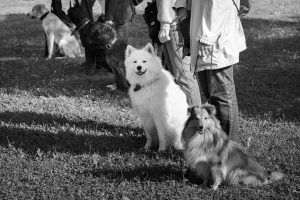
filling group classesBut these criteria — a good time, dog performance in the classroom, positive evaluations — are misleading indicators at best. Yes, you absolutely want your students to enjoy their time with you (and vice versa). It’s fantastic to see dogs “getting it” in the moment. And who doesn’t want a positive eval? But you need to ask an entirely different set of questions to really determine whether your classes are successful.

Are students engaging?
Are students diving into exercises or waiting for step-by-step instructions? Do they try an exercise a few times and then wait for one-on-one feedback, or are they continually working their dogs? Do they apply lessons and concepts without being prompted? For example, asking their dogs for a wait at your door when you aren’t working on wait. Or treating their dog for not barking when another dog does because you’ve been working on catching dogs getting it right, or rewarding what you like.

A successful classroom is one in which students actively participate in learning, rather than waiting for each instruction. A strong curriculum creates an atmosphere in which students learn to apply recently acquired knowledge and skills to new situations. Too often dog classrooms — much like school classrooms — are focused on the instructor. Students are taught to always follow a lead, and rarely do they learn to stand on their own. In effect, trainers forget to remove the luring and prompting, leaving students unable to act effectively without us.

Are students problem solving?
Are students given opportunities to encounter new situations and make decisions about how to respond? Because they’ll encounter situations in the real world every day, and you won’t be there to tell them what to do. Too many dog training curricula adhere to the old explain-demo-practice model. And when trainers do give students an opportunity to encounter a more real-life practice scenario — say, putting some treats or another distraction on the ground — they usually undermine any benefit by telling them what to do: “Walk to within five feet and then tell your dog ‘leave it.’”

But students must learn to make their own criteria decisions and be able to handle real-life distractions. Their world is full of them. When I put some treats on the ground I don’t care if the dog leaves them; what I want to know is: Does the student notice them? Does she make a proactive decision about what to do? I don’t care if she lets her dog have the treats, tells him to “leave it,” tells him “come” or “let’s go” or “watch,” or chooses to give them a wide berth. My definition of success is that she reads the environment, judges the right criteria for her dog, and chooses a course of action that works for her. Explain-demo-practice drills, or even a collection of fun games, will not teach students these life-with-dog skills.

Problem solving is also about making adjustments. Can a student recognize that something isn’t working and make an unprompted change? For example, to notice her dog has become distracted by another dog having moved closer and adjust the length of the stay they were working on? Or increase her rate of reinforcement or switch to a higher value treat or body block or use some sweet talk? Or, for that matter, move farther away from the other dog? Again, I don’t care what the student’s solution is — only that she recognizes the need for one and tries the positive tools taught in class until she gets her dog refocused. For this to happen, I must resist the temptation to stand at her elbow suggesting each move. I also need to allow for individual criteria setting and success rather than asking the class to all work on a two-minute stay, for example.

Are students carrying the classroom with them?
One of my favorite tactics to judge my own success when I taught training classes was to position myself inconspicuously somewhere outside the classroom before and, if I could sneak away, after class. I liked to watch my students outside of class when they didn’t realize they were being watched. Not to check up on them — to check on my own efficacy. What did they do in the parking lot? How did they interact with their dogs? Were they carrying the skills and concepts from class into the world outside?

I was watching for those tell-tale moments: A dog noticing and beginning to pull toward a buddy from class. A McDonald’s wrapper on the sidewalk. (Sometimes deliberately placed there, I’ll admit.) A gaggle of parading pigeons. Did my students notice early enough to be proactive? What decisions did they make? Did they make adjustments when what they tried first didn’t work? Because if the classroom experience isn’t even making it out into the parking lot, it’s pretty unlikely it’s changing behavior (human or dog) at home.

Are they coming back?
Life is busy and students will miss a training class here and there. But very nearly all students should complete their first class, even if they missed a week somewhere along the way. Dropouts are a clear sign that a class, regardless of how enjoyable it might be or how much the students like the instructor, is not feeling relevant to life outside the classroom. Students may love an instructor, but if what is being done in class is not translating to beneficial change outside of it, it’s all too easy to disengage and put limited time resources elsewhere.

Retention from course to course is critical as well. From a business perspective, repeat business is the number one indicator of success. No class program can boast 100% retention and of course numbers will decline from class one to two, from two to three, and so on. But the more a curriculum is built around students learning skills and concepts and learning to apply those to problem solving for real life, rather than around achieving specific dog behaviors, the more likely students will come back for more. They come back not just because they enjoy class, but also because class makes a difference at home and in the world.

(See Increase Class Program Retention With Topics Classes for ideas on how to use shorter classes to improve student retention from one course to the next.)

Are you asking the right questions?
Questions to ask of students. Trainers often rely heavily on gut feelings and student evaluations to determine how they’re doing. But gut emotions can be misleading — even irrelevant — and we rarely ask the right questions on evaluations. For example, the common question, “Which behaviors were most and least useful?” misses the mark entirely. Trainers often insist that dog training is about teaching people, not dogs. Though we advocate for a move away from this notion in private training, we agree with it wholeheartedly in a class setting; it really cannot be otherwise. But to say that dog training is about training people and then to build a curriculum based on teaching dogs behaviors is a glaring disconnect. If the classroom is about teaching people, why ask about behaviors on evaluation forms?

Instead, ask questions that get to the heart of the matter: What’s going on at home? For example, “Which concept that we’ve learned in class have you most used outside the classroom in day-to-day life with your dog, and how?” Or, “What has been the biggest change you’ve made outside the classroom?”

Questions to ask of ourselves. In gauging class success, try to replace “Are they having fun? Did I perform well? Did the dogs do the behaviors in class?” with “Are my students engaging? Are they problem solving? Are they behaving differently outside my classroom?” Because yes answers to these questions will certainly mean a yes answer to the central business question: “Are they coming back?”

Filling Your Classes

group dog classesIf you’re a typical class trainer you’d rather think about what you’re going to do with students once you have them in your classroom than what you’re going to do to get them there. For most of us, teaching is much more fun than marketing — and it comes much more easily. But given the difficulty of teaching without students, it’s best to make sure you get the most from your marketing time and dime.

Here are some tips for getting your classes filled:

Class Titles and Descriptions
Everybody and their aunt teaches “Puppy” and “Basic.” You may be tempted to jazz up your class titles, and you should. But be careful that prospective students can still tell what you’re offering. Clever class titles may accidentally camouflage your classes, causing them to be overlooked. And many people will look for classes online. If a potential client searches for “Puppy Class” and yours is called “Surviving Your Dog’s Toddler Years,” they may not find you. So if you have a way with words, try subtitles. For example, “Basic Manners: Channeling Your Dog’s Inner Lassie.”

Focus your class descriptions on human-oriented outcomes. What will students be able to do after taking your class? How will they feel different? How will their lives be improved? A list of behaviors — the typical meat of a class description — does none of these things. It just lists behaviors, and so does everyone else’s class descriptions. Make yours stand out by telling potential students how they’ll be able to walk down the street with ease — no more embarrassment and no more back aches. Tell them how it will feel to have the dog that everyone covets. Wouldn’t they like to be the person asked, “Wow. How do you get your dog to be so calm and well behaved?” And wouldn’t it be less stressful to know they were coming home to a dog who hasn’t destroyed the house? Tell potential students that your class is the first step toward these goals.

Marketing Projects
We’ve written more than once about the power of community- or content-based marketing for dog trainers. Your time and money are better spent on projects that give people some sort of direct experience of your expertise, professionalism, and efficacy rather than on passive forms of advertising in which you tell them how great you are. (This is particularly true for positive reinforcement trainers, with whom we work exclusively, as they are less apt to feel comfortable singing their own praises — and, accordingly, are less apt to do so well.)

Think beyond fliers. Fliers are fine, but they’re passive. Instead, embed your class schedule in a content marketing project such as a quarterly newsletter or branded tip sheets. Dog owners are more likely to act on the class schedule printed on the back of a great Building a Solid Recall handout than to respond to a class flier. Why? Because the training tip on the front gives a taste of your expertise and style.

Give referral sources a taste. Referral sources who have directly experienced your classes are more apt to remember to recommend them — and to do so enthusiastically. Give pet supply stores, vet offices, and any other referral outlets you’re after a free class pass or two for staff members to use. (This will also help to fill new classes so you can run them for your paying students.) Or even offer a class just for the staff of a particular clinic or daycare at a day and time convenient to them.

Help referral sources help you. Once you have a referral source on your side, make it easy for them to refer to you. Provide them compelling material to give to their customers. Business cards are easily lost and brochures are commonplace and passive in nature. Your newsletter or tip handouts are more likely to finish the sale and less likely to find their way to the trash.

If you’re ready to take a referral relationship to the next level, ask them to include information about your classes on their website and in their email list blasts. (This is particularly appropriate in cases where you’re teaching classes in their space or engaging in any sort of cross-promotion.) Again, make it easy. Email language to use and any visuals you’d like them to include, such as your logo file. Your information will go up on their site and out to their email list faster if they don’t have to create the content themselves.

Optimize your website. If a dog lover can’t find you she can’t take your class. If your site isn’t performing well in searches for the classes and services you offer, it’s probably because it hasn’t been properly optimized. Don’t assume if you had your site professionally designed and programmed that it’s also been optimized. Search engine optimization, or SEO, is a niche skill set and, unfortunately, many programmers do not pursue it. SEO can range a great deal in simplicity and complexity, and in cost. But even a small amount of attention and money paid to it can bring significant results. Just be careful to seek out qualified, ethical practitioners, as the industry is sadly rife with scams. (dogbiz provides free SEO referrals if you are unable to find a local professional–just email and ask.)

Get caught in the act. What better way for people to experience you than to literally see you in action? Look for opportunities for public training. Post short YouTube videos of your classes. Provide demos or hold 15 minute mini-classes at local events and festivals. Take your advanced students on the road — hold class in front of the local mall or supermarket or in a popular park. It’s great practice for your students and gives onlookers a first-hand glimpse of what they and their dog might be capable of.

In all of these in-person situations, bring along someone to pass out class information to onlookers and answer their questions while you teach. At events, offer a 10% discount to anyone registering on the spot. And outfitting yourself and your students in logo t-shirts is a great way to increase brand visibility.

Get covered. Find out who covers goings-on in your community for the local paper and invite that reporter to take pictures of one of your classes. Better yet, have her show up for the class you hold in public. If she has a dog herself, give her a free pass to take your class so she can write about her own experience. And don’t overlook events calendars in the local paper. It’s often free to submit, so get your classes listed. Check with the local radio station about free event listings, too.

Put it in writing. Nothing says “go-to expert” like your name in print. Ask the editor of the local paper about carrying an Ask the Trainer or Training Tips column. Or offer the same to run in school, church, neighborhood association, or senior center newsletters or bulletins. Such smaller publications may also be happy to print your class schedule alongside your article.

Class Offerings and Structure
As we’ve written about in other articles, the structure and content of your classes can play a critical role in their success, too. One-shot teaser classes, shorter topics classes, open enrollment, and curriculum focused on real-life application all help first-time and retention sales. If you’re still teaching behavior-based classes following the old “explain-demo-practice” model, it may be time to shake things up a bit.

For more ideas about success with group classes:

The Dog Training Class Revolution

Many years ago in my previous career, I taught learning theory and curriculum development to teachers and graduate students pursuing their master’s degrees in education at one of the top-ranked education programs in the country. My students’ biggest challenge was learning to translate theory into practice. It’s one thing to understand how people learn, and how typical education practices fail to use that knowledge. It’s another thing altogether to think outside the typical models of instruction we’re all familiar with, to create new ways of teaching informed by what we know about how people learn.

I see this struggle in our industry. We’ve become enamored with alternative class structures such as open enrollment, levels, and modular programs, but we’ve largely failed to adapt curriculum design to meet the challenges a non-linear approach to education brings. It’s not enough to change how we schedule people into classes or to give them choices about which behaviors they wish to teach their dogs and in what order. These are merely structural changes. Curriculum is about not just which subjects are taught and in what order; it is about how they are taught, and to what ends.

Non-linear classes demand an entirely different approach to teaching; without this, classes all too easily devolve into mini-privates as the instructor runs from student to student trying to provide individual instruction to each, resulting in a disjointed experience for students and instructor alike. This attempt to adapt our old explain-demo-practice curriculum model (a poor model to begin with) to a more one-on-one approach will not create the real change we are seeking.

When we at dogbiz designed our Open Enrollment Puppy Curriculum and Open Enrollment Basic Manners curriculum packages, we employed several innovations: self-contained lesson planning, a heavy focus on teaching humans the skills and concepts they need to improve daily life with their dogs, and a real-life thematic weekly structure.

A Non-Linear Approach
Allowing students to join class at any time means you can no longer rely on building one session from the next. You can’t break things down over time — duration and distance stays before distraction stays, for example — and you don’t always have the luxury of teaching behaviors in the order you’re accustomed to and comfortable with — a Sit before a Down, Sits and Downs before Stays and Recalls. You have students just getting started mixed with students who have been with you for one week or many.

We created the concept of self-contained lesson planning to address these challenges without giving up a cohesive group experience. Classes should still feel like classes, not a collection of mini-privates. The simplest explanation of self-contained lesson planning is that it builds skills and experiences over the course of each one-hour class session instead of from week to week, while also using the learning from previous weeks. The trick is activities that allow each student and dog to tackle the same challenges as their peers, but at their own level of experience, knowledge, and skill.

And isn’t this exactly what we should be teaching? How can we hope to change students’ daily lives with their dogs if we don’t teach them how to handle the real world at their dog’s level? It’s not enough to talk at students about criteria setting — we need to teach them how to do it in real-life situations.

Teaching Humans, Not Dogs — For Real
As an industry we give too much lip service to this concept without enough substantial action. We’re fond of talking about dog training being about teaching humans more than dogs, but I’ve rarely visited a dog training class that adheres to this philosophy in actual curriculum and instructional practice. The basic explain-practice-demo model is good for one goal only: to teach a dog to perform a behavior in the classroom.

If you tackle curriculum development by deciding which behaviors to teach, you’re already on the wrong path. It’s largely irrelevant whether a dog can do a Stay in class, or for how long and at what distance. What’s important is the student’s ability to read the environment and figure out how to help his dog respond successfully — what behaviors are reasonable to ask for, and what needs to be done to get them (adding distance, blocking view, increasing rate of reinforcement or the value of the reinforcer, etc.).

In short, a dog training class curriculum should largely be focused on teaching students the basic problem-solving skills trainers employ without thought — situational awareness, criteria setting, reinforcement strategies, making adjustments as needed. These are the things that will result in pet dogs with reliable behaviors in the real world. And talking about them won’t teach these skills — our classrooms have to set people up to actually use and practice them in circumstances designed to mirror daily life with dogs.

Weekly Themes: Real-Life Context
One of the innovations we built into our Open Enrollment Puppy Curriculum and Open Enrollment Basic Manners is the use of weekly themes designed to place students in a real-life framework. One week in puppy class, for example, might be devoted to learning how to successfully navigate a visit to the vet’s office. Sit/Stay and handling exercises are designed to teach criteria setting, getting and keeping a dog’s focus, and body language awareness. These are further practiced during puppy socialization play sessions. And then these budding skill sets are applied to a mock vet visit in which students decide where in the lobby to sit, how long a Sit/Stay to ask for, what reinforcement rate to use. They are also asked to report on any body areas their pups seemed uncomfortable having touched.

Similarly, our basic manners class teaches students to master working at their dogs’ level via criteria setting, reading their dog, and reading the environment, all within real-life-based weekly themes such as relaxing at home, entertaining guests, or taking a walk in the park. Students apply the concepts first to help their dogs learn behaviors key for manners and impulse control, then to a real-life challenge such as helping their dogs relax on their bed or mat while they check email or watch TV, or to the proper greeting of strangers, or to ignoring the types of outdoor distractions one might find in a park. Each student tackles these same challenges at her own level, with longer-term students applying previous lessons to the challenge as well.

Placing students in real-life situations breathes life into the skills, concepts, and behaviors being taught, giving them real-world context and increasing the likelihood students will use what they’ve learned outside of class, where it matters.

Viva La Revolución!
As a long-time advocate for school reform, I’m excited about the revolution going on in dog training classrooms. I’m excited to see our industry thinking outside the box, realizing that classes don’t have to look the way they always have. We’re throwing out the old rules, deciding that classes don’t have to always be six weeks, that students don’t have to all start on the same day, that we don’t have to teach behaviors in a pre-set order, that we don’t even have to teach in a strictly linear fashion with each week relying on the week before.

But these changes have to run deeper than mere changes in structure. They require changes in how we think about curriculum development and teaching, too — this must be the next step in our dog training class revolution if we’re to see meaningful change in the lives of dogs and their people outside our classrooms.

It’s Time To Take Some Time Off

taking time off is good for you and your businessDepending on where you live, summers and holidays likely see RVs rolling down the highway, station wagons and SUVs loaded down with bicycles and camping gear, school-age children screaming through local parks in the middle of the weekdays, or tourists sauntering about with cameras and pointing index fingers. What about you? Did you get a break this year?

Everywhere we travel giving business talks for dog pros, we hear the same refrain: “I haven’t had a vacation in years.” “I couldn’t possibly take time off.” People have even tried to tell us that it’s impossible for a dog trainer/sitter/walker/daycare or boarding operator to take a vacation. We disagree. Not only is it quite possible, it’s imperative.

There are countless advantages to working for yourself as a dog pro—no supervisor micromanaging your work, no co-workers who make your eyes roll, no busy work or illogical requests coming across your desk. Oh, and you get to work with dogs. But then there’s the downside: No structure, no one to hand you a regular paycheck, all the responsibility for just about everything, so many people relying on you. Oh, and no paid vacation time.

It’s easy to feel that you can’t get away. Who would take care of the dogs whose owners are away on vacation? What would your clients do without daycare or walking for a week? Who would answer the phone and return emails? And how could you possibly afford it?

Before we help you answer those questions, here are a few more: How can you afford not to take a vacation? Who will take care of your clients and their dogs when you’ve burned out? What will you do instead of working with dogs when you are so tired that you don’t enjoy it anymore? Remember what the airline flight attendants say before take off: You’re supposed to put on your own oxygen mask before helping others. There’s a good reason for that.

Here are tips for a stress-free vacation from doing what you love:

Plan Ahead
Your schedule is crazy. You can barely keep up. You can’t imagine when or how you’ll get away. The trick is to turn the calendar page. Turn as many pages as you have to to find a blank spot—a week where nothing has yet been penciled in. Pull a fat black Sharpie marker from your desk and fill that week with so much ink you couldn’t possibly write over it.

There. You have your dates. Now you just have to figure out what fun things you’ll do and where you’ll do them.

Give Lots Of Notice
Given how busy dog pros tend to be, you probably had to plan a few months out anyway, so this one’s easy. Give your clients plenty of heads-up about your plans; at least a couple of months’ notice. Then put it in your calendar to give them a reminder at the one month, two weeks, and one week marks, just to be safe.

Let clients know what’s expected of them. You may choose to arrange a substitute walker or sitter for your clients, for example, but don’t feel obligated to do so. Schools close in the summer, on holidays, and for teacher in-service days, and working parents manage to figure out what to do with their children. Your clients can absolutely do the same for their dogs.

Simply write, “We’ll be closed on these dates. I wanted to give you early notice so you have plenty of time to make alternate arrangements for Fido.” You’ll likely be showered with well-wishes for your vacation and supportive comments like, “It’s about time! You sure deserve it.”

And if you’re worried that your clients will jump ship while you’re gone, don’t be. The likelihood of that is very, very low. They’re going to be just as excited to see you back as their dogs are.

Choose The Slow Times
The dog industry has natural yearly cycles. Sitters and boarding facilities are busiest during the holidays and summer months, for example, while these times tend to be slower for most dog trainers. Take a look at the patterns in your business and, if possible, take your vacation when things tend to be slower. This will help keep your revenue losses to a minimum and lessen the impact on your clients as well.

Budget
Put a bit aside for your vacation during the busier months so you can take time off with less financial stress and worry. Then get creative about planning a wonderful vacation that fits your budget. You may not yet have the funds for a trip to Europe or the Bahamas, but perhaps a road trip would do the trick. Are there unexplored areas close to home that you’ve overlooked for their proximity? A friend to visit? Maybe resources you haven’t considered? One of our clients announced a small upcoming vacation at home and one of her daycare clients gave her use of a vacation home!

Go
You’ve planned and budgeted, now go. It’s that simple. Just go. Have a great time. The world and the dogs will be there when you get back.

Don’t Work
If your budget only allows a staycation, be disciplined about not working. Lock the computer in a closet if you have to. Consider putting together an itinerary of day trips or plans—hiking, lunch with friends, a novel you’ve been looking forward to—to make sure you take advantage of your downtime.

It’s tempting to keep working right through vacation these days. E-mail, texting, and mobile phones make it hard to truly get away. But nothing ruins a vacation faster than taking a frustrating phone call or dealing with a missing class registration. So record a vacation phone message and turn on your auto reply. There’s little that can’t wait until you get back.

If you find that you rest easier and enjoy yourself more not knowing you have a full inbox waiting for you, allow yourself an hour of email each morning. Then lock the computer away and go have fun.

Plan For Easy Re-Entry
Try to give yourself at least one day at home before you jump full time back into the business. Get unpacked, maybe catch up on a little email, take it easy. The transition from vacation to business owner can be jarring. Take it slowly and you have a better chance of bringing some of your newfound vacation zen back with you into the job.

Make A Habit Of It
Plan to take at least one vacation every year. In addition to the obvious personal benefits, your clients will become accustomed to your vacation schedule, making the whole process smoother for everyone.

One trick is to take the same week or weeks off each year so your clients know to plan for those dates. This is an easy way for facility-based businesses to give staff time off (and maybe even take an extra day or two for deep cleaning and a little maintenance work). And it means you don’t skip a year and cheat yourself out of some much needed and deserved time off.

Work-life balance is something we prioritise in THRIVE! Discover how you can win back ‘me-time’ through our group coaching program.

Why You Should List Your Rates on Your Website

Very few dog pros I know are comfortable talking about their rates with potential clients. Let’s face it: We’re dog lovers, not salespeople. But you shouldn’t let that discomfort extend to your website. In fact, handling the numbers right on your site can make the over-the-phone or in-person sales process much easier on yourself—and on your potential clients, too.

Tell People What They Want To Know

We are often asked whether rates should be included on websites. The answer is a resounding YES. We see a lot of dog pro sites—particularly training sites—with no pricing information. This is a huge mistake. People go to websites to make purchase decisions, to decide if you’re the right dog pro for them. By asking them to contact you for your rates, you run a real risk of losing many potential clients. Some will move on to competitors’ sites, looking for one who answers all their questions—including “What will this cost?” Some will assume that if they have to ask, it’s more than they can afford. And if they do call? You have to have that dreaded numbers talk. Imagine the peace of mind of knowing a potential client called you after seeing what you charge—how much easier is that sales conversation for you both?

Trainers often leave rates off their websites because they customize the training to each client. In this case, explain how the process works and list your initial consult rate so potential clients at least know what the first step will cost them. You might also consider sharing some ballpark figures to give people a range of what different types of training scenarios can run. Take the worry and guesswork out of the equation for people. When they call, you’ll know they’re serious and they’ll know you’re honest and not likely to try a hard sell.

Help People Choose The Right Fit

If you provide pricing choices—various daycare packages, for example, or different types of training (coaching, day training, board and train), help people choose the right fit. First, keep your choices few and simple. Marketing research shows that having too many choices often leads to no choice at all. Second, tell potential clients how to make the decision. Who is each type of training best for? What kinds of situations are best served by which of your packages?

Put Your Prices Where They Belong—With Your Services

Your prices should be on your services pages, not dangling by themselves on a separate page. You especially don’t want your pricing page accessible via your main menu, where people can go straight there without first learning what you’re all about—and what you can do for them. And you don’t want rates hidden on another page only accessible from an internal service page, either. One of the central rules of good website design is to make important information easy to find so people stay on your site.

Include your pricing on your services page. Make it easy to see, and surround it with your marketing message. What benefits will I see from sending my dog out with you for daily walks? What do I get for that $XX per day?

Convince People They’re Making The Right Choice

It’s great to have a separate page of testimonials, but those only do you good if a potential client chooses to click over and read them. So whether or not you have a dedicated testimonials page, place short testimonial excerpts throughout your site, and especially on your services pages near your pricing. Set them apart with a larger font size or a pull out box or other design element to draw the eye. Reading testimonials can help people jump down off the fence and make a purchase—so make sure potential clients see yours right as they’re considering your pricing and all you have to offer.

A well-designed website should do much of your sales work for you, increasing the number of inquiries you get and sending folks your way who have already decided you’re the dog pro for them, rates and all. If you’re like most dog pros—more dog lover than salesperson—this can make life quite a bit easier.

For more website and rates advice, consider joining our group coaching program THRIVE!